Daily AI Signal for Engineers

LLMs · RAG · Agents · Production Tools

Hand-picked news from 50+ sources + original engineering deep dives.

No hype, just signal.

Updated dailyOriginal articlesFree forever

Weekly AI digest every Sunday · No spam

Interactive AI Visualizer

Watch gradient descent & attention run live — no code.

Explore →

From the Blog

In-depth AI engineering takes for practitioners who ship.

Read latest →

Today's AI Feed

47 articles today
When LLM judges agree, should we believe them?
· 5 min read· 3 days ago

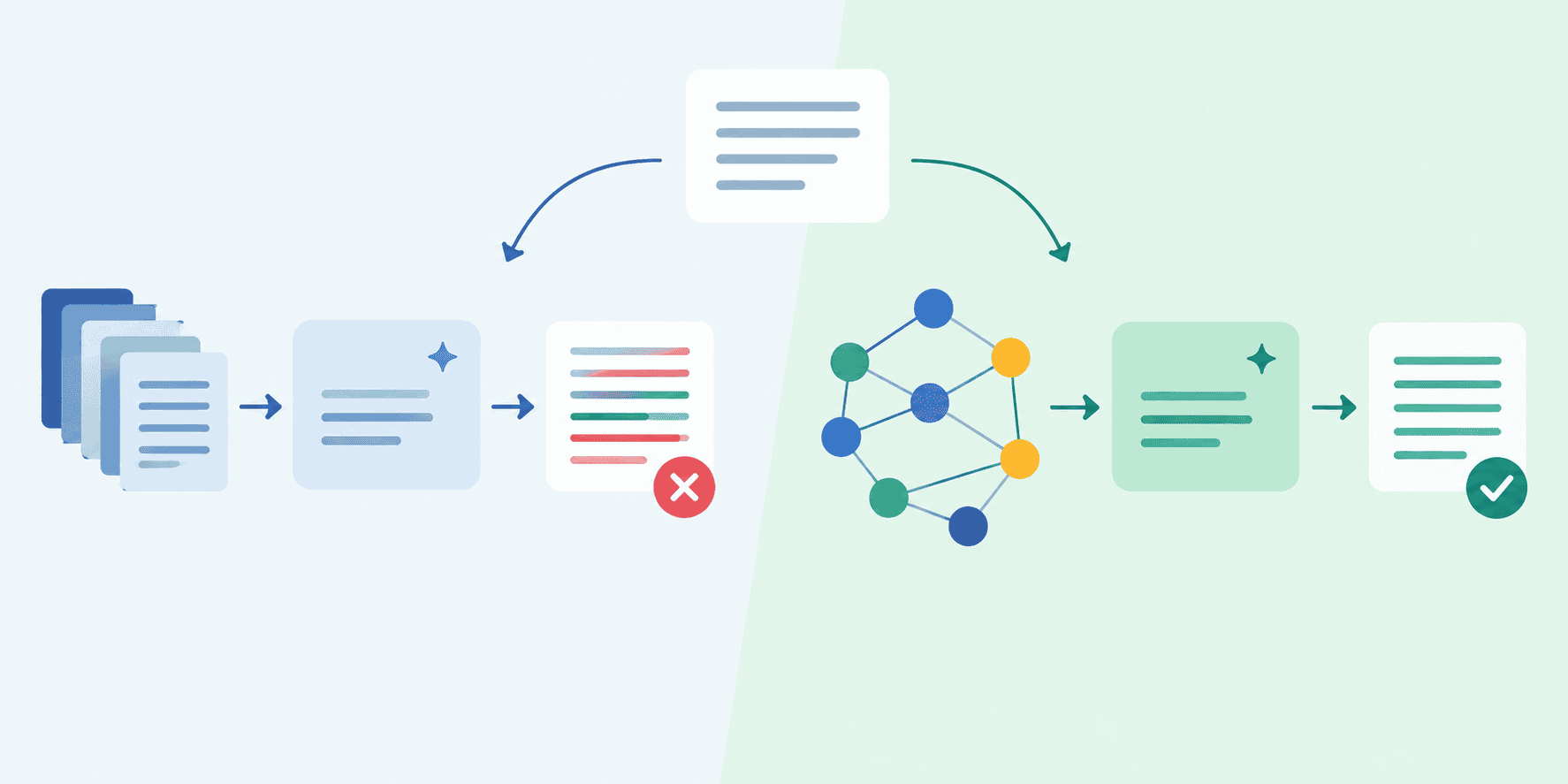
When LLM judges agree, should we believe them?

When several LLM judges produce highly correlated

Building an AI Text Detector From Scratch
· 3 min read· Aug 15, 2026

Building an AI Text Detector From Scratch

The article discusses building an AI text detector from scratch, with the goal of explaining how AI detectors work and using it as a verifier to train a small language model to produce text that avoids detection. The detector will be built using a method similar to Pangram models, which is behind Substack's AI detection feature, and will return a 0-100 score indicating the likelihood of the text being AI-generated. The project aims to illustrate the limitations of AI detectors and explore a verifier-based LLM application. The practical implication for engineers building AI systems is that they can use this approach to develop their own AI detectors and improve their understanding of AI-generated text.

With a feel for physics, AI models simulate a wider range of real-world scenarios
· 5 min read· Aug 10, 2026

With a feel for physics, AI models simulate a wider range of real-world scenarios

Researchers at MIT's CSAIL and Tsinghua University have developed a new pre-training approach called GeoPT, which enables simulation models to learn physics in a broader and more efficient way, allowing them to model the real world more accurately and train on up to 60% less data. GeoPT uses synthetic dynamics, a series of interactions between small particles and complex 3D shapes, to give models a sense of how physics works. This approach can help engineers predict how vehicles, everyday items, and robots respond to various physical elements, such as wind, water, and collisions. The practical implication for engineers building AI systems is that GeoPT can accelerate the development of more realistic and accurate simulations, enabling the creation of more reliable and efficient AI models.

Plaud unveils wearable earbuds with built-in agentic AI interface
· 2 days ago

Plaud unveils wearable earbuds with built-in agentic AI interface

Plaud Inc. has launched the Plaud One Explorer Edition, a pair of earbuds paired with a charging case that doubles as a listening device, enabling users to connect directly to AI agents for both professional and everyday digital tasks. The earbuds feature an embedded agentic AI interface that streams audio and contextual data to the agent, allowing real‑time voice commands and hands‑free interaction. While the product focuses on seamless integration with existing AI agent frameworks, the design trades off extended battery life for continuous connectivity and low‑latency audio capture. The release signals a move toward more immersive, wearable AI assistants that can be embedded in everyday accessories.

How to Build a Robust RAG System with Minimal Resources
· Aug 20, 2026

How to Build a Robust RAG System with Minimal Resources

The article demonstrates that a fully functional retrieval‑augmented generation (RAG) pipeline can be built and run on a standard laptop without relying on cloud resources. It outlines how to assemble a local vector store, generate embeddings with a lightweight model, and perform inference with a small LLM, achieving near‑real‑time response times. The key trade‑off highlighted is the reduced compute capacity, which limits the size of the knowledge base and the complexity of the LLM compared to cloud‑hosted solutions. The piece concludes that this approach is ideal for rapid prototyping and low‑budget deployments

A decade of mathematical certainty: Reflections on the Automated Reasoning Group
· 8 min read· Aug 11, 2026

A decade of mathematical certainty: Reflections on the Automated Reasoning Group

The Automated Reasoning Group (ARG) at Amazon has made significant progress over the past decade in applying mathematical logic and formal verification techniques to prove the correctness and security of AWS systems. The group's production services now process billions of queries daily, and their work has led to the development of tools such as Tiros, Zelkova, and Lean, which are used to analyze network security, policies, and cryptographic protocols. The use of automated reasoning and proof assistants has enabled the group to prove the correctness of complex systems, including the Nitro Confidentiality Engine and the AWS policy interpreter. This work has had a significant impact on the security and reliability of AWS systems, and its practical implications for engineers building AI systems include the potential to apply similar techniques to ensure the correctness and security of AI mod

Controlling Reasoning Effort in LLMs
· 32 min read· Jul 18, 2026

Controlling Reasoning Effort in LLMs

The recent release of the GPT-5.6 model family by OpenAI has brought attention to the concept of controlling reasoning effort in Large Language Models (LLMs). The GPT-5.6 model comes in three sizes, each with roughly five or six reasoning-effort settings, allowing for more flexibility in task performance. This article aims to explain how to develop a reasoning model with multiple effort modes, similar to the GPT-5.6 model. The key to achieving this is through training and inference scaling, using techniques such as reinforcement learning with verifiable rewards (RLVR). For engineers building AI systems, understanding how to control reasoning effort in LLMs can lead to more efficient and effective model deployment.

Build Low-Latency Multilingual Voice Agents: Open Weights & Full Deployment Control with NVIDIA Magpie TTS
· 5 min read· Aug 10, 2026

Build Low-Latency Multilingual Voice Agents: Open Weights & Full Deployment Control with NVIDIA Magpie TTS

Not mentioned. The title suggests a technical announcement about building low-latency multilingual voice agents using NVIDIA Magpie TTS, but without the content, specifics are unavailable. This could potentially impact engineers building AI systems, particularly those focused on voice agents or multilingual support. The use of NVIDIA Magpie TTS implies a focus on text-to-speech technology. Engineers might need to consider low-latency and deployment control in their designs.

The benefits of medical AI assistance vary based on user expertise
· 6 min read· Aug 4, 2026

The benefits of medical AI assistance vary based on user expertise

Researchers at MIT and elsewhere found that AI assistance improved the accuracy of non-experts and clinicians in diagnosing skin diseases, but the impact of explainable AI methods varied depending on the users' knowledge level. Non-experts trusted LLM-based explanations, even when incorrect, while clinicians performed best with only a model's prediction and no explanation. The study highlights the importance of building AI systems with users in mind and developing explainability methods that encourage critical thinking. This has significant implications for engineers building AI systems, as they must consider the potential for algorithmic deference and automation bias in human users.

The Pulse: What can we learn from Bun’s rapid Rust rewrite with AI?
· 11 min read· Jul 16, 2026

The Pulse: What can we learn from Bun’s rapid Rust rewrite with AI?

The creator of JavaScript runtime Bun, Jarred Sumner, has rewritten the project from Zig to Rust using the tool Fable, eliminating memory-related bugs and improving stability. Bun is a complex project with 22 million monthly downloads, and its dependencies include software like Claude Code and hosting providers like Vercel. The rewrite was necessary due to Zig's lack of memory safety, which caused continuous memory leaks and crashes. Rust's memory-safe features, such as compiler errors and automatic cleanup with Drop, have improved the project's stability. The use of Fable has made the rewrite process significantly faster than traditional methods.

Build agentic creative workflows with Amazon Quick and fal
· 12 min read· Yesterday

Build agentic creative workflows with Amazon Quick and fal

The post introduces a reusable agent harness that stitches together Amazon Quick and fal

Glean unveils Tau desktop workspace, claims token-cost edge over Claude
· 3 days ago

Glean unveils Tau desktop workspace, claims token-cost edge over Claude

Glean Technologies Inc. has launched Glean Tau, a desktop workspace that bridges its enterprise AI stack with a user’s local files, applications, and code. The product emphasizes a token‑cost advantage over OpenAI’s Claude, positioning itself as a more economical option for on‑prem or hybrid workloads. Tau’s architecture hinges on a lightweight client that streams local data to Glean’s cloud models while maintaining strict data locality controls. The release signals a shift toward tighter integration of LLMs with everyday developer tools, though it currently requires a Glean enterprise subscription and has limited language‑model support.

Managing Small Context Windows in Language Models
· Aug 18, 2026

Managing Small Context Windows in Language Models

The article outlines three concrete techniques for handling the limited context windows of large language models, providing ready‑to‑run Python code for each. It covers chunking input data, sliding‑window overlap, and prompt‑engineering tricks that keep token counts below

AWS Trainium Frontier competition: Co-design models and kernels on purpose-built AI chips
· 6 min read· Aug 10, 2026

AWS Trainium Frontier competition: Co-design models and kernels on purpose-built AI chips

The AWS Trainium Frontier competition invites researchers to co-design models and kernels on purpose-built AI chips, exploring the efficient frontier of model architectures on AWS Trainium. The competition provides a ~50M parameter baseline language model and challenges participants to modify everything, including architecture, optimizer, training loop, and custom NKI kernels, to optimize the model architecture and training throughput within a fixed time and compute budget. The goal is to find the balance between model capacity and training throughput, driving validation bits-per-byte low and downstream in-context learning capability high. The optimal architectures will differ from those designed for existing accelerators due to Trainium's unique hardware features. The practical implication for engineers building AI systems is the opportunity to discover new model architectures designed

NVIDIA Cosmos-H-Dreams: Bringing Real-Time Generative Simulation to Surgical Robotics
· 5 min read· Jul 27, 2026

NVIDIA Cosmos-H-Dreams: Bringing Real-Time Generative Simulation to Surgical Robotics

Not mentioned. The title suggests a connection to NVIDIA and surgical robotics, but without content, the core technical finding or announcement is unknown. Not mentioned. Not mentioned. The practical implication for engineers building AI systems is also not mentioned.

Alexander Rakhlin named director of  the MIT Statistics and Data Science Center
· 3 min read· Aug 3, 2026

Alexander Rakhlin named director of the MIT Statistics and Data Science Center

Alexander Rakhlin has been named the director of the MIT Statistics and Data Science Center, succeeding Ankur Moitra. Rakhlin is a renowned expert in statistics and machine learning, and has been connected to the center since 2016. He aims to support the community in tackling evolving questions in statistics, machine learning, and AI. With over 75 PhD students defended under his guidance, Rakhlin brings a wealth of experience in interdisciplinary research and education. The appointment is expected to further strengthen the center's research and academic programs, with a focus on rigorous science and statistical analysis.

The Pulse: Interesting AI coding stats from Cursor
· 6 min read· Jul 9, 2026

The Pulse: Interesting AI coding stats from Cursor

A recent report from Cursor reveals that power users generate 10x as many lines of code as the median, with the top 1% of users creating around 30-40K lines of code per week. The report also shows that Cursor consumes 10x more input tokens than it generates in output tokens, with 90% of token usage being input tokens. This highlights the importance of caching context to reduce token costs, with Cursor's caching mechanism reducing token costs by 10x. The practical implication for engineers building AI systems is to prioritize context reuse and caching to improve efficiency.

Visa ships a security AI that patches production code before any human reviews it
· 10 min read· 2 days ago

Visa ships a security AI that patches production code before any human reviews it

Visa has released an open‑source security harness that autonomously identifies vulnerabilities, generates fixes, and subjects its

Introducing OpenAI models on Amazon Bedrock for in-country inferencing in India
· 15 min read· 2 days ago

Introducing OpenAI models on Amazon Bedrock for in-country inferencing in India

Amazon Bedrock has added support for OpenAI’s GPT‑5.6 family—specifically the Terra and Luna models—within India, enabling cross‑Region inference that keeps all request traffic and data confined to Indian data centers. This move allows customers to run large‑scale LLM workloads locally without routing traffic outside the country, a key requirement for many compliance‑heavy industries. While the announcement does not disclose latency or cost figures, the geographic isolation may introduce higher round‑trip times compared to global endpoints, yet it satisfies strict data residency mandates.

Agentic web search infrastructure startup Keenable raises $26M
· 3 days ago

Agentic web search infrastructure startup Keenable raises $26M

Keenable.ai Inc. has secured a $26 million seed round to overhaul web‑search infrastructure that was originally designed for human users, aiming to make it scalable for the projected billions of autonomous agents that will soon dominate the internet. The company plans to re‑engineer core search pipelines to handle agent‑centric query patterns, reduce latency, and support higher request volumes. While the announcement does not disclose specific architectural details or benchmark numbers, it signals a shift

7 Regression Tests Every AI Agent Should Pass Before Deploy
· Aug 17, 2026

7 Regression Tests Every AI Agent Should Pass Before Deploy

The article introduces seven concrete regression tests specifically designed to detect orchestration-layer failure modes in AI agents before they are deployed. These tests focus on critical interactions between the agent’s decision logic, external APIs, and state management, ensuring that the agent behaves correctly under realistic deployment scenarios. By systematically validating

EXPLORE AI NEWS

Daily hand-picked stories on LLMs, RAG, agents and production AI — curated for engineers who ship.

BROWSE NEWS

GET THE WEEKLY DIGEST

Join engineers getting the Monday signal-over-noise AI breakdown. No spam, unsubscribe anytime.

LEARN AI ENGINEERING

Curated courses, research papers, repos and tutorials built for engineers leveling up in AI.

START LEARNING