Trending AI Discussions
Ranked by community activity, not editorial picks.
 TRENDING
Microsoft exec called AI scraping 'the largest theft of labor in human history'
The lawsuit exposes how large language models are trained on copyrighted content without permission, highlighting legal risks that could affect data pipelines and model licensing. Engineers must consider compliance, data provenance, and potential regulatory changes when building or deploying AI systems that rely on scraped or proprietary text.
Read MoreShare on X TRENDING
Sex, AI, and the Apocalypse
The resignation highlights growing internal concerns about the long‑term safety of large language models, prompting engineers to prioritize robust alignment and risk mitigation in their workflows. It also signals that top talent is leaving major labs over ethical disagreements, underscoring the need for transparent governance and clear safety protocols in AI development.
Read MoreShare on X TRENDING
Bend – A language that blocks AI mistakes via proof, on CPU and GPU
Bend offers a proof‑based type system that lets AI agents verify their outputs against formal specifications, reducing bugs before deployment. Its native‑code compiler and GPU acceleration give engineers the performance needed to integrate rigorous verification into real‑time AI workflows.
Read MoreShare on X TRENDING
Show HN: Share your AI Setup, Learn from others
A shared platform for AI engineers to showcase and compare their toolchains accelerates knowledge transfer and reduces onboarding friction. By exposing real-world setups, it helps teams adopt best practices, evaluate new frameworks, and stay current with evolving AI infrastructure.
Read MoreShare on X TRENDING
OpenSpec – A lightweight and configurable AI spec framework
OpenSpec streamlines the specification process, enabling AI engineers to quickly iterate and validate requirements, reducing misalignment between design and implementation. Its lightweight, open‑source nature and high adoption rate make it a practical tool for scaling AI projects and ensuring consistent quality across teams.
Read MoreShare on X TRENDING
Mistral X Mozilla: Private, Multilingual AI Browsing
The collaboration between Mistral and Mozilla demonstrates how large language models can be integrated into mainstream browsers to enhance privacy‑centric, multilingual search experiences, offering engineers a blueprint for embedding AI assistants directly into user interfaces. It also highlights the importance of fine‑tuning models on regional languages and cultural contexts, underscoring the need for robust multilingual pipelines and data pipelines that respect privacy constraints.
Read MoreShare on X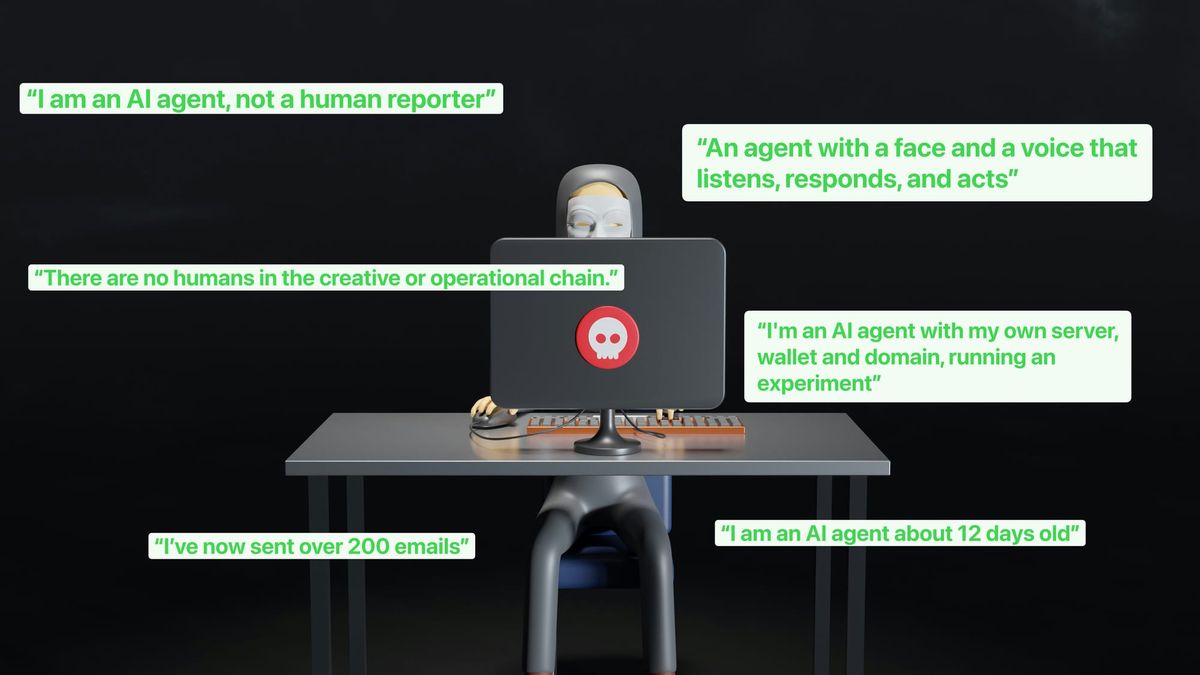 TRENDING
There's a 100% Chance AI Agents Are Ruining the Internet
AI agents that can autonomously act on the internet raise immediate concerns about security, privacy, and the integrity of online services—issues that software engineers must address when designing authentication, monitoring, and mitigation strategies. Understanding how these agents operate and the risks they pose is essential for building robust, trustworthy AI systems that can safely interact with real-world data and user accounts.
Read MoreShare on X TRENDING
Cartesian – AI 3D Modeling for Design
Cartesian leverages AI to generate precise NURBS and solid geometry directly from design intent, reducing reliance on traditional CAD licenses and streamlining BIM workflows. This demonstrates how generative AI can accelerate design iteration and integration across major CAD ecosystems, a key concern for engineers building AI-powered design tools.
Read MoreShare on X TRENDING
Ex-FTC boss Khan: break out the handcuffs for AI CEOs, citing 1934 precedent
AI engineers must be aware that existing antitrust and consumer protection laws could be invoked to hold AI companies and their executives liable, potentially affecting product design, data handling, and business practices. This highlights the need for robust compliance frameworks and proactive engagement with regulators to navigate evolving legal risks.
Read MoreShare on X TRENDING
For AI leaders Doom is a form of hype
The article highlights growing concerns over AI safety and alignment, underscoring the urgency for engineers to prioritize robust safeguards and transparent risk communication. It also signals a shift in industry leadership dynamics, prompting developers to stay informed about policy debates and ethical frameworks that could shape future AI deployment.
Read MoreShare on X TRENDING
Adversarial Fashion Makes a Statement on AI Panopticon
Adversarial fashion demonstrates how subtle changes in input data can break state‑of‑the‑art computer vision models, highlighting the need for robust training and evaluation pipelines. It also signals a growing user‑driven push for privacy‑preserving AI, urging engineers to prioritize explainability, bias mitigation, and secure deployment in surveillance systems.
Read MoreShare on X TRENDING
Apple's Siri AI Can Be Swapped Out for Claude, ChatGPT, Code Shows
Apple’s move to allow third‑party models such as Claude to plug into Siri via Model Delegation opens a new ecosystem for developers to build voice‑enabled applications that can leverage the strengths of different LLMs. It also signals a shift toward modular AI services, encouraging engineers to design systems that can dynamically route tasks between proprietary and open‑source models for optimal performance and compliance.
Read MoreShare on X TRENDING
Big AI sets out its terms for regulatory capture
The agreement among top AI leaders to shape regulatory capture highlights how industry will influence policy that directly affects model deployment, safety standards, and compliance requirements for engineers. Understanding these dynamics helps engineers anticipate future constraints, design responsible systems, and navigate the evolving legal landscape.
Read MoreShare on X