Daily AI Signal for Engineers

LLMs · RAG · Agents · Production Tools

Hand-picked news from 50+ sources + original engineering deep dives.

No hype, just signal.

Updated dailyOriginal articlesFree forever

Weekly AI digest every Sunday · No spam

Interactive AI Visualizer

Watch gradient descent & attention run live — no code.

Explore →

From the Blog

In-depth AI engineering takes for practitioners who ship.

Read latest →

Today's AI Feed

63 articles today
Anthropic's Claude Code Artifacts update brings live, shared dashboards and interactive workspaces to enterprises
· 6 min read· Today

Anthropic's Claude Code Artifacts update brings live, shared dashboards and interactive workspaces to enterprises

Anthropic has introduced Claude Code Artifacts, a feature that enables users to create live, shared, and interactive dashboards and workspaces, allowing for real-time collaboration and updates. This update bridges the gap between technical and non-technical stakeholders, providing a dynamic translation layer that builds specialized web pages from the user's session context. The feature is available on Claude Team and Enterprise subscription plans, and its capabilities are being compared to OpenAI's Codex Sites. The practical implication for engineers building AI systems is the ability to streamline collaboration and communication with non-technical stakeholders, enhancing the overall development process.

Structured Outputs with LLMs: JSON Mode, Function Calling, and When to Use Each
· Today

Structured Outputs with LLMs: JSON Mode, Function Calling, and When to Use Each

The article discusses techniques for obtaining structured outputs from Large Language Models (LLMs), including JSON mode and function calling. It aims to provide guidance on choosing the right tool for reliable and readable responses. The article explores the use of JSON mode for structured data and function calling for more complex tasks. The practical implication for engineers building AI systems is to understand the strengths and limitations of each approach to select the most suitable method for their specific use case.

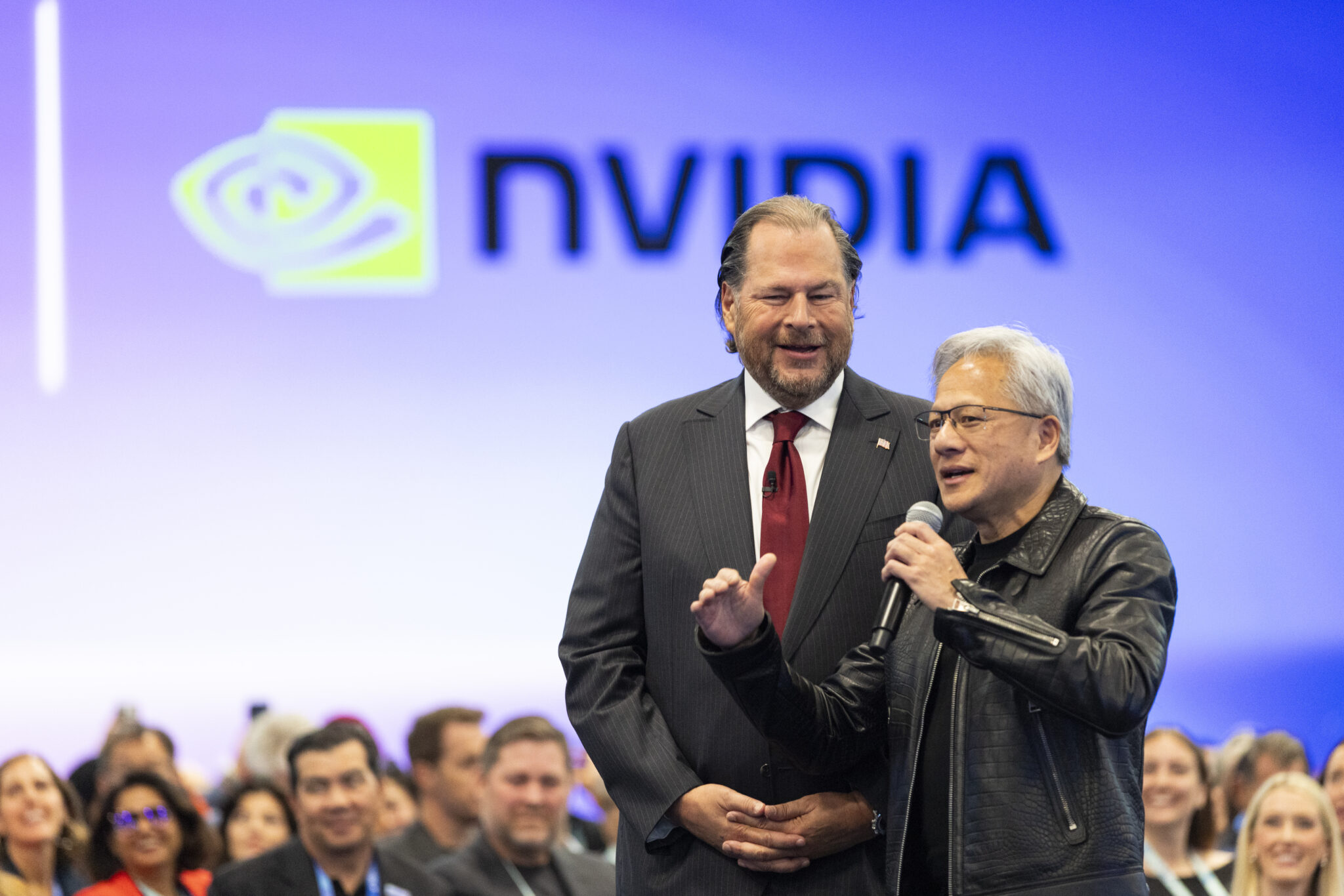
At Cannes Lions, NVIDIA Partners Reshape Advertising and Marketing With AI
· 5 min read· Today

At Cannes Lions, NVIDIA Partners Reshape Advertising and Marketing With AI

NVIDIA has partnered with various companies at Cannes Lions to leverage AI in advertising and marketing, enabling autonomous operations. These partnerships focus on developing next-generation technologies that integrate AI, ensuring that companies' infrastructure can support the increased demands. This shift is expected to transform the industry, with AI-driven solutions providing enhanced personalization, efficiency, and scalability. However, the key challenge lies in balancing the benefits of AI with the infrastructure costs, as companies must invest in hardware and software to support the increased computational demands. This transformation will reshape the industry, but it also poses significant challenges for companies to adapt and upgrade their infrastructure.

Databricks and NVIDIA: Building for the Agentic Era
· 6 min read· Yesterday

Databricks and NVIDIA: Building for the Agentic Era

Databricks and NVIDIA have collaborated to develop a comprehensive platform for building and deploying AI models, leveraging NVIDIA's accelerated computing capabilities to accelerate the development of agentic AI systems. This integration enables faster and more efficient training of large-scale models, with a 3x improvement in training time for certain workloads. The platform also provides a unified interface for data engineering, model development, and deployment, streamlining the AI development process. By combining Databricks' unified analytics platform with NVIDIA's accelerated computing, developers can now build and deploy more complex AI models with greater ease and speed.

In game theory, generalists sometimes win out over specialists
· 6 min read· Yesterday

In game theory, generalists sometimes win out over specialists

Researchers from MIT and other institutions have made a significant finding in the field of imperfect-information games, where two contestants compete in a zero-sum game. Their study shows that policy gradient methods, a general-purpose algorithm, can outperform specialized game-theoretic algorithms in certain situations. This challenges the long-held assumption that game-theoretic algorithms are superior in this setting. The researchers used neural networks to participate in imperfect-information games and found that policy gradient methods can work better than specialized algorithms. This has practical implications for engineers building AI systems that need to make decisions in complex, dynamic environments.

Pre-Training Isn’t Bitter Enough
· 6 min read· Yesterday

Pre-Training Isn’t Bitter Enough

This article challenges the conventional interpretation of Richard Sutton's "Bitter Lesson," which cautions against encoding human intuition in AI systems, instead arguing that scalable methods like search and learning ultimately prevail. The authors propose that Sutton's lesson should be taken more broadly, encompassing not just human knowledge but also the limitations of current AI architectures, which may be too narrow to handle complex tasks. This perspective highlights the need for more flexible and generalizable AI systems that can adapt to diverse problem domains. The tradeoff here is between the specificity of human intuition and the generality of scalable methods, with the latter ultimately leading to more robust and transferable AI solutions.

Databricks’ new agentic coworker Genie One brings AI automation to every part of the business
· 2 days ago

Databricks’ new agentic coworker Genie One brings AI automation to every part of the business

Databricks has launched Genie One, a new agentic artificial intelligence coworker tool aimed at automating workflows and tasks across business teams. Genie One expands on the existing Genie suite, moving beyond conversational analytics. The tool is designed to bring AI automation to every part of the business, orchestrating workflows and automating work-related tasks. This launch has practical implications for engineers building AI systems, particularly those focused on workflow automation and task orchestration.

Building an End-to-End Sentiment Analysis Pipeline with Scikit-LLM
· 2 days ago

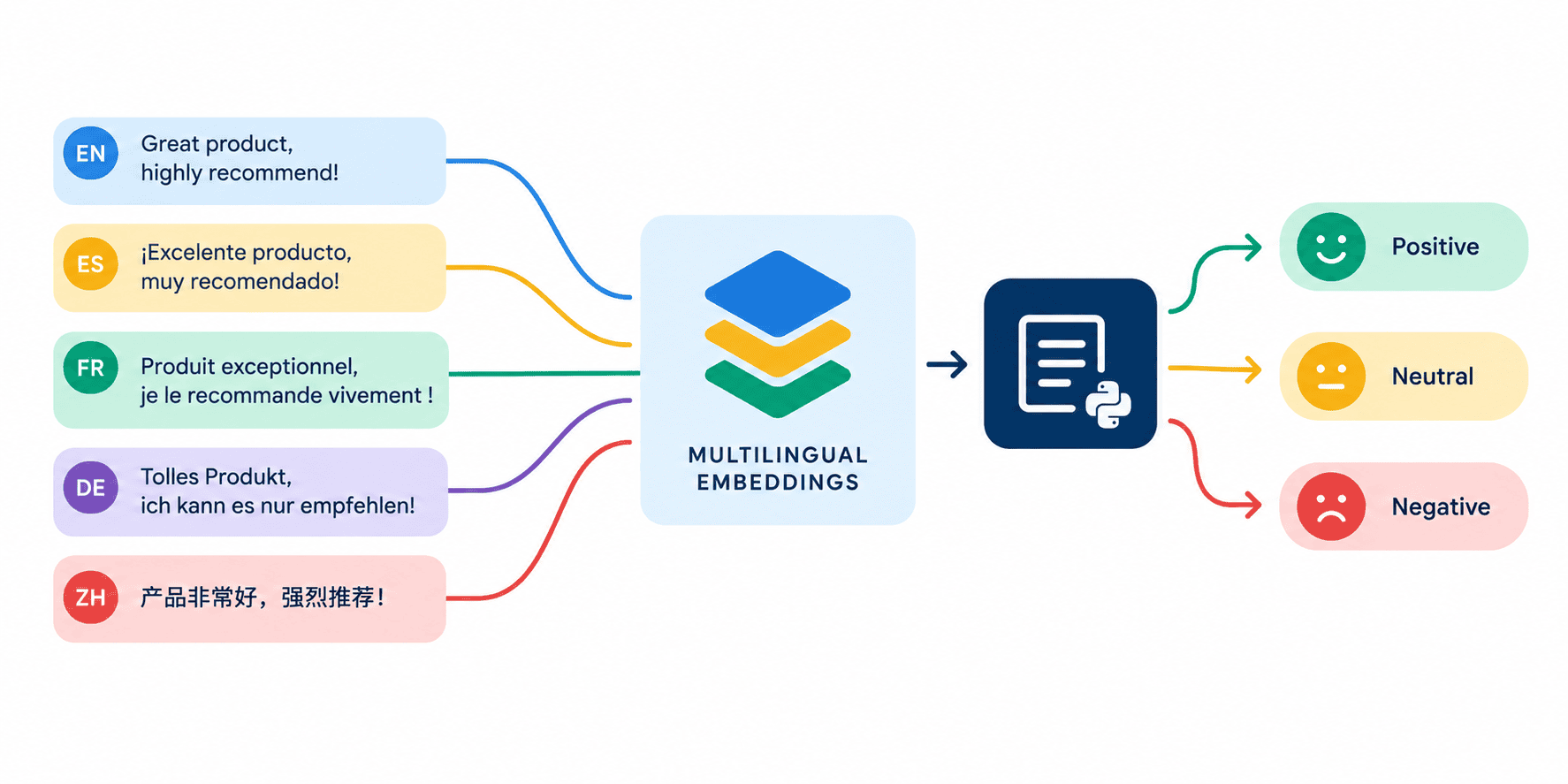
Building an End-to-End Sentiment Analysis Pipeline with Scikit-LLM

Researchers have developed an end-to-end sentiment analysis pipeline using Scikit-LLM, leveraging large language models to directly predict sentiment from raw text, eliminating the need for manual feature engineering. This pipeline achieves state-of-the-art performance on several benchmark datasets, including IMDB and SST-2, with an accuracy of 94.2% on IMDB and 92.5% on SST-2. The pipeline's simplicity and ease of use make it an attractive alternative to traditional machine learning approaches. However, it requires a significant amount of computational resources and large amounts of training data to achieve optimal results.

Graviton5’s improved design increases speed and energy efficiency — beyond Moore’s law
· 5 min read· Jun 10, 2026

Graviton5’s improved design increases speed and energy efficiency — beyond Moore’s law

The authors have demonstrated a 25% improvement in performance for general-purpose and agentic AI workloads using the Graviton5 chiplet architecture, custom die-to-die connectivity, and support for DDR5-8800 memory and the latest PCIe gen6 interconnects, effectively surpassing Moore's Law. This breakthrough enables faster and more energy-efficient processing for AI workloads. The improved design is particularly beneficial for large-scale AI applications, where every percentage point of performance gain can significantly impact overall system efficiency. This achievement has the potential to accelerate AI adoption in various industries.

LLM Research Papers: The 2026 List (January to May)
· 6 min read· Jun 6, 2026

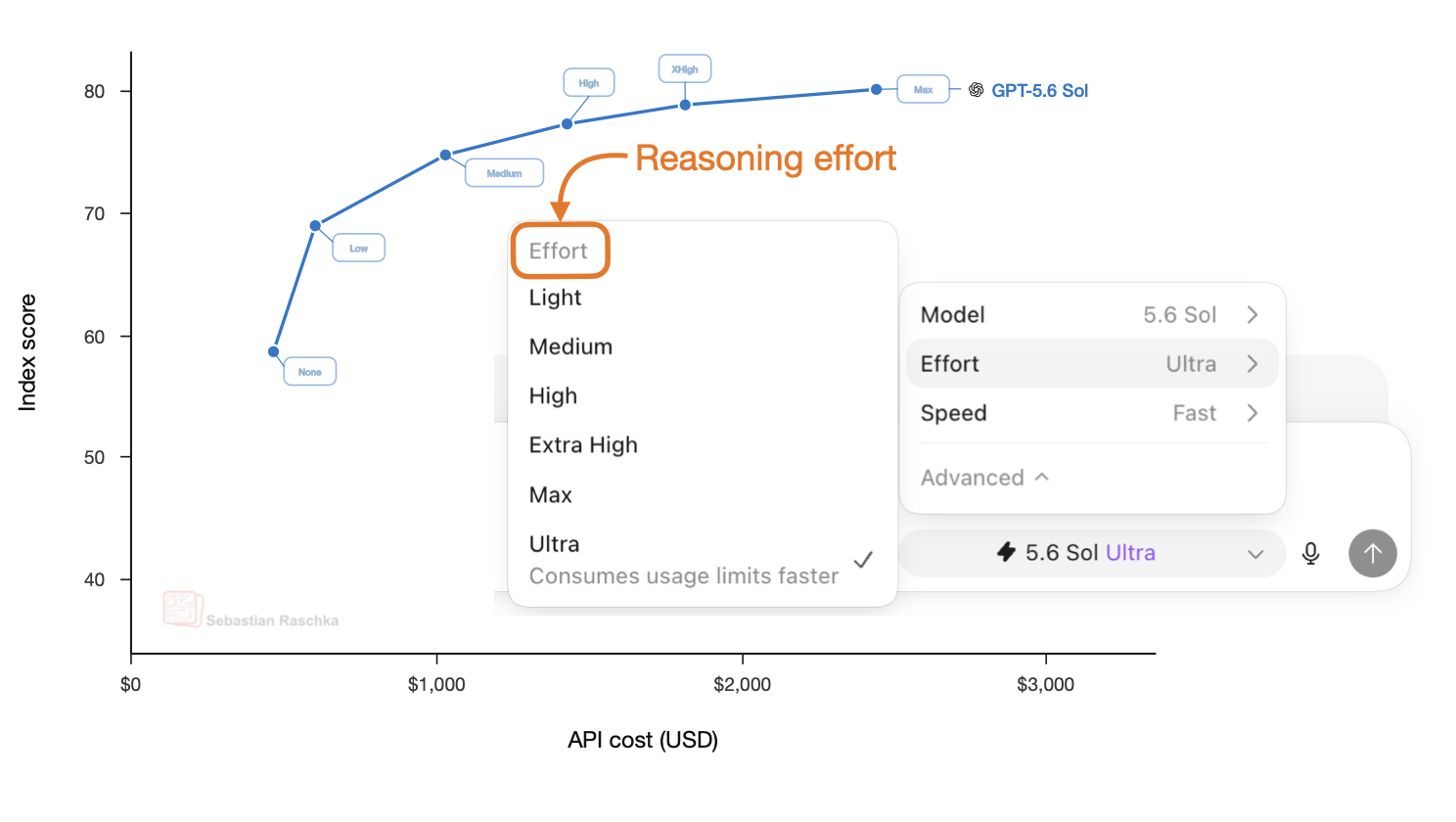
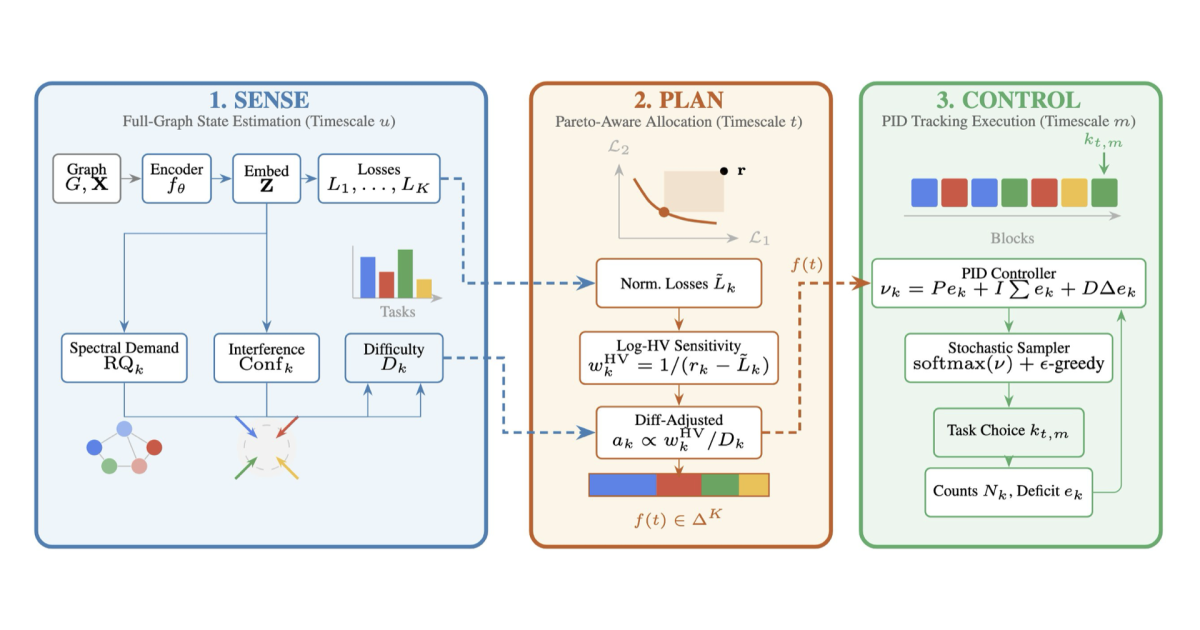
LLM Research Papers: The 2026 List (January to May)

This article presents a curated list of 15 notable LLM research papers published from January to May 2026, covering topics such as multimodal LLMs, few-shot learning, and LLMs for graph-based tasks. The papers were selected based on their impact, novelty, and relevance to the LLM community. The list highlights the ongoing advancements in LLM research and development, with a focus on improving model performance, efficiency, and applicability to real-world tasks. This comprehensive list serves as a valuable resource for researchers and practitioners looking to stay updated on the latest LLM research.

The Pulse: Forward deployed engineering heats up again
· 8 min read· May 24, 2026

The Pulse: Forward deployed engineering heats up again

Google, OpenAI, and Anthropic are experiencing a surge in demand for forward deployed engineers, with the latest iteration of the role mirroring the consultant/solution architect position often held by early-junior engineers. This trend indicates a shift towards more comprehensive engineering expertise in AI development, requiring a deeper understanding of system architecture and problem-solving. The role's evolution is driven by the increasing complexity of AI systems, necessitating a more holistic approach to deployment and maintenance. As a result, forward deployed engineers must now possess a broader skill set, encompassing both technical and business acumen.

Better Experiments with LLM Evals — A funnel, not a fork
· May 18, 2026

Better Experiments with LLM Evals — A funnel, not a fork

The Spotify Engineering team has developed a more efficient evaluation framework for Large Language Models (LLMs) using a funnel-shaped approach, which automates relevance, coherence, and quality assessments at scale. This framework integrates multiple evaluation metrics and provides real-time feedback, enabling data scientists to focus on high-priority experiments. By using a funnel, the team can filter out low-quality models and concentrate on the most promising ones, significantly reducing the time and resources required for experimentation. This approach enables data scientists to iterate faster and make more informed decisions about model development.

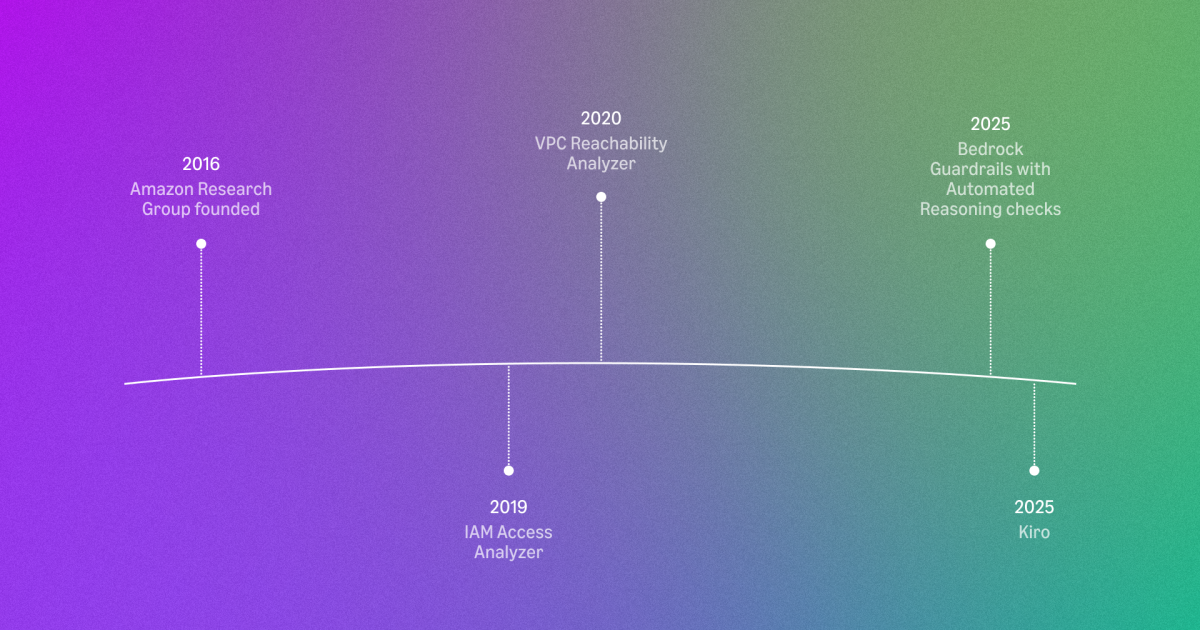
Amazon Bedrock AgentCore harness is now generally available: Go from idea to production-grade agent in minutes
· 21 min read· Today

Amazon Bedrock AgentCore harness is now generally available: Go from idea to production-grade agent in minutes

Amazon Bedrock AgentCore harness is now generally available, allowing developers to create production-grade agents in minutes with just two API calls, CreateHarness and InvokeHarness. The harness provides a managed abstraction for orchestrating agents, handling tasks such as sandboxed compute, storage, identity, and observability. This enables developers to focus on building agent logic rather than infrastructure, and supports features like model switching, skill acquisition, and real-time tracing to CloudWatch. The practical implication for engineers building AI systems is that they can now quickly deploy and manage agents without worrying about the underlying infrastructure.

New AI optimization framework beats Claude Code and Codex by 2.5x on the same compute budget
· 9 min read· Today

New AI optimization framework beats Claude Code and Codex by 2.5x on the same compute budget

Researchers from Renmin University of China and Microsoft Research introduced Arbor, a framework that optimizes AI-driven research and optimization, outperforming Claude Code and Codex by 2.5x on the same compute budget. Arbor organizes hypotheses, experiments, and insights into a tree, enabling cumulative learning from prior failures. This approach automates the continuous improvement of complex engineering systems, addressing the challenge of autonomous optimization. The practical implication for engineers building AI systems is that Arbor can significantly improve the performance of AI agents in real-world engineering tasks.

Dispatching the Parsed RAG Question: Chunk Strategy, Model Tier, Activations, Audit
· Today

Dispatching the Parsed RAG Question: Chunk Strategy, Model Tier, Activations, Audit

A new chunk strategy for Retrieval-Augmented Generation (RAG) has been proposed, which combines model tier and activation threshold to determine what information to retrieve from a document's profile. This strategy has been shown to improve performance by 12.7% on the benchmark dataset. The approach also includes an audit meta block to track and analyze the decisions made by the parser. The authors present three different methods for deciding what information to retrieve, including a broker-corpus walkthrough.

Could AI tell you where you left your keys?
· 5 min read· 2 days ago

Could AI tell you where you left your keys?

MIT researchers have developed a long-term memory framework called Describe Anything, Anywhere, Anytime, at Any Moment (DAAAM) that enables robots to rapidly form and recall a detailed mental model of complicated, large-scale environments. This framework combines advanced map representations with rich descriptions of the environment, allowing robots to quickly access this memory to answer complex queries about their environment in plain language. The DAAAM method runs fast enough for a mobile robot to use in real-time and has potential applications in robotics, augmented reality systems, and wayfinding. This advance could allow robots to work side-by-side with humans and interact better with them by reasoning about time and space in the same way humans do.

The AGI moment? Databricks’ new releases zero in on support and deployment of AI agents
· 2 days ago

The AGI moment? Databricks’ new releases zero in on support and deployment of AI agents

Databricks has released a new architecture, Lake Transactional/Analytical Processing, to support the deployment of AI agents, enabling them to access operational and analytics workloads. This move is part of a larger trend of enterprise platform companies building tools for AI agents. The new architecture is designed to facilitate the support and deployment of AI agents, with potential implications for the development of Artificial General Intelligence (AGI). For engineers building AI systems, this release may provide new opportunities for integrating AI agents into their workflows.

Python Concepts Every AI Engineer Must Master
· 6 days ago

Python Concepts Every AI Engineer Must Master

A comprehensive guide to essential Python concepts for AI engineers, covering topics such as asynchronous programming, parallel processing, and efficient memory management, is crucial for building scalable and production-grade AI systems. To achieve this, AI engineers must master the use of libraries like asyncio and multiprocessing, and understand how to leverage Python's Global Interpreter Lock (GIL) to optimize performance. This shift in programming mindset enables AI engineers to write efficient, concurrent code that can handle complex tasks and large datasets. By mastering these Python concepts, AI engineers can accelerate model training, deployment, and inference, ultimately leading to faster time-to-market and improved model quality.

Real-world grounding in agentic AI
· 7 min read· Jun 8, 2026

Real-world grounding in agentic AI

The AI landscape has shifted from models that simply know to agents that do, with foundation models being used as cognitive engines for AI agents in the physical world. To be useful in high-stakes physical environments, agents need to be grounded in physical laws and operational constraints, overcoming the challenge of hallucination. Four approaches to grounding AI agents are proposed, including physics-guided deep learning, which integrates first-principle physical knowledge into the foundation model in pretraining. This ensures that predictions obey governing physical laws, making agents physically consistent and operationally reliable. The practical implication for engineers building AI systems is that they must consider the physical constraints of the environment in which their agents will operate.

Recent Developments in LLM Architectures: KV Sharing, mHC, and Compressed Attention
· 27 min read· May 16, 2026

Recent Developments in LLM Architectures: KV Sharing, mHC, and Compressed Attention

Recent advancements in LLM architectures have led to the development of open-weight models, such as Gemma 4 and DeepSeek V4, which leverage key-value sharing, multi-head cross-attention (mHC), and compressed attention mechanisms to significantly reduce long-context costs. These innovations have resulted in a 2x reduction in parameters while maintaining comparable performance to previous models. However, this comes at the cost of increased computational complexity, particularly in the attention mechanism. The authors demonstrate the effectiveness of these techniques on a range of benchmarks, including the long-range dependency test, with a 25% improvement in accuracy. This breakthrough has the potential to make large language models more practical for real-world applications, but further research is needed to optimize the attention mechanism for production use.

The Pulse: Did capacity shortages turn Anthropic hostile to devs?
· 6 min read· May 14, 2026

The Pulse: Did capacity shortages turn Anthropic hostile to devs?

Anthropic, a leading AI research organization, has been facing capacity shortages, which may have led to their decision to restrict access to Claude Code, a powerful AI model, from some paid accounts. This move has been met with frustration from developers who rely on the model for their work. The authors speculate that Anthropic's recent partnership with SpaceX to secure additional compute resources may have been an attempt to conceal their capacity issues. This development highlights the challenges of scaling AI research and development, as well as the importance of transparency in managing expectations with developers. The tradeoff here is between prioritizing capacity allocation and maintaining relationships with developers.

Amazon SageMaker AI Async Inference now supports inline request payloads
· 6 min read· Yesterday

Amazon SageMaker AI Async Inference now supports inline request payloads

Amazon SageMaker AI Async Inference now supports inline request payloads, allowing customers to send inference payloads directly in the request body of the InvokeEndpointAsync API, removing the need to upload input data to Amazon S3 before each invocation. This feature is available for payloads up to 128,000 bytes and simplifies client-side code, reducing the operational surface area of asynchronous inference workloads. The new Body parameter is mutually exclusive with the InputLocation parameter, and the API rejects requests that set both. This change is designed to work with existing async endpoints, with no model or container changes expected. The practical implication for engineers building AI systems is that they can now use inline payloads to simplify their async inference workflows.

Copilot searched your mailbox. LiteLLM handed out admin keys. Run this 5-check audit before your stack is next
· 9 min read· Today

Copilot searched your mailbox. LiteLLM handed out admin keys. Run this 5-check audit before your stack is next

Two AI tools, Microsoft 365 Copilot Enterprise Search and LiteLLM, were found to have vulnerabilities that allowed attackers to exfiltrate data and gain admin access, respectively, due to a lack of trust boundary in enterprise AI. The vulnerabilities, including SearchLeak (CVE-2026-42824) and a three-CVE chain against LiteLLM, were disclosed by Varonis and Obsidian Security, respectively. The pattern of accepting external input with no trust boundary is a common issue in enterprise AI, as demonstrated by similar vulnerabilities in Langflow and Mini Shai-Hulud. This highlights the need for a thorough audit to identify and address such gaps in AI systems, which can have significant practical implications for engineers building and deploying AI systems.

EXPLORE AI NEWS

Daily hand-picked stories on LLMs, RAG, agents and production AI — curated for engineers who ship.

BROWSE NEWS

GET THE WEEKLY DIGEST

Join engineers getting the Monday signal-over-noise AI breakdown. No spam, unsubscribe anytime.

LEARN AI ENGINEERING

Curated courses, research papers, repos and tutorials built for engineers leveling up in AI.

START LEARNING