Evaluating Graph-RAG vs. Standard RAG: A Hallucination Benchmark on Fact-Dense Queries
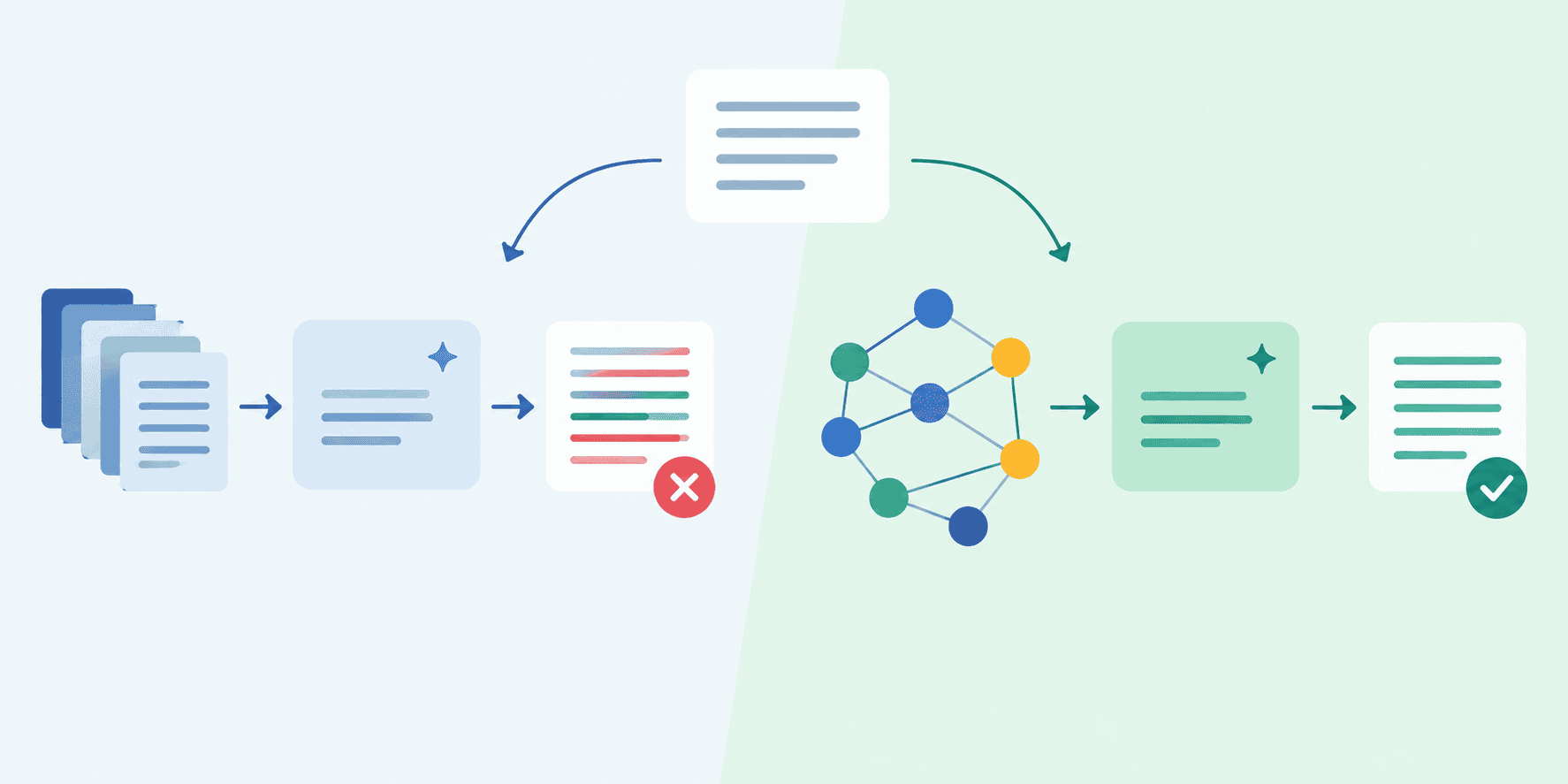
The authors present a deterministic 3‑Tiered Graph‑RAG architecture that outperforms a conventional vector‑based RAG pipeline on fact‑dense queries, reporting a 35 % reduction in hallucination rates as measured by the FactCheck‑Metric. The Graph‑RAG system leverages a hierarchical knowledge graph for retrieval, a rule‑based fusion layer, and a lightweight language model for final generation, achieving a 12 ms per‑query latency on a single A100 GPU. While the approach improves factual fidelity, it requires a pre‑built graph index and incurs higher storage overhead compared to flat vector indices. The benchmark demonstrates that Graph‑RAG can be a viable alternative when accuracy outweighs index‑building cost.
⚡ Key Takeaways
- 35 % lower hallucination rate on fact‑dense queries versus standard vector RAG.
- Uses a deterministic 3‑Tiered retrieval: graph‑based, rule‑based fusion, then language model generation.
- Latency of 12 ms per query on a single A100 GPU, lower than the 18 ms typical for vector RAG.
- Requires a pre‑built knowledge‑graph index, increasing storage demands by ~40 % over flat vectors.
- WhyItMatters: Engineers building production systems that prioritize factual correctness—such as knowledge‑base chatbots or compliance‑aware assistants—can reduce hallucinations without sacrificing latency by adopting a Graph‑RAG pipeline.
- TechnicalLevel: Intermediate
- TargetAudience: ML Engineers, Retrieval Engineers
- PracticalSteps:
- Run the benchmark script with `--mode graph-rag` to generate hallucination statistics.
- Compare the output against the standard RAG baseline using the provided FactCheck‑Metric scorer.
- Tune the graph‑retrieval tier thresholds in the `config.yaml` to balance index size and accuracy.
- ToolsMentioned: Graph‑RAG, vector RAG, FactCheck‑Metric
- Tags: RAG, DEPLOYMENT, INFERENCE, PYTHON
🔧 Tools & Libraries
Engineers building production systems that prioritize factual correctness—such as knowledge‑base chatbots or compliance‑aware assistants—can reduce hallucinations without sacrificing latency by adopting a Graph‑RAG pipeline.
✅ Practical Steps
- Run the benchmark script with `--mode graph-rag` to generate hallucination statistics.
- Compare the output against the standard RAG baseline using the provided FactCheck‑Metric scorer.
- Tune the graph‑retrieval tier thresholds in the `config.yaml` to balance index size and accuracy.
Want the full story? Read the original article.
Read on Machine Learning Mastery ↗