Machine Learning Mastery
Adding Temporal Reasoning to Graph-RAG: Tracking Fact Freshness and Staleness
✦TL;DR
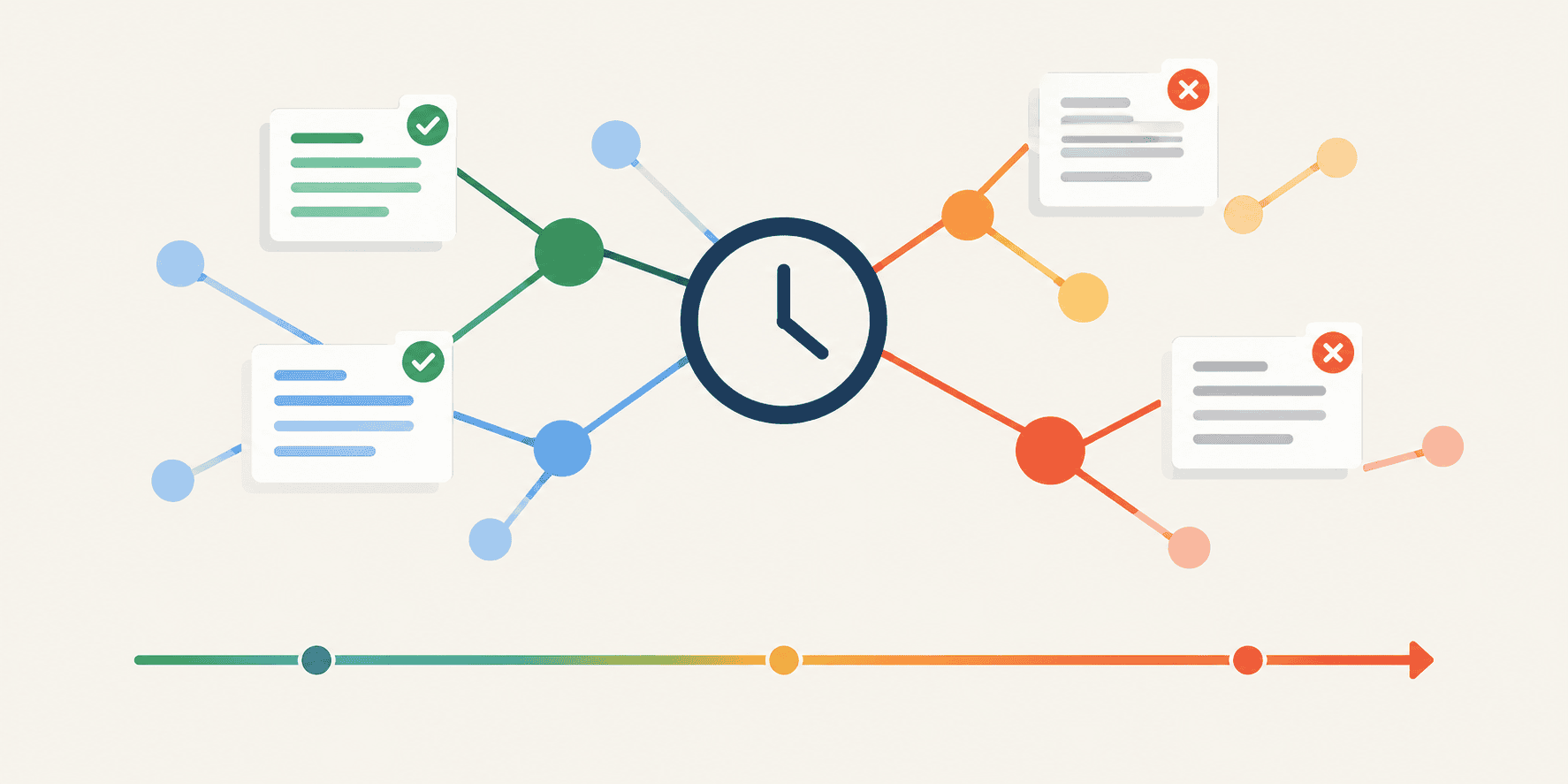
The article introduces a lightweight temporal reasoning layer for Graph‑RAG that annotates retrieved facts with freshness scores, enabling the system to prioritize up‑to‑date information over stale entries. By integrating a timestamp‑based decay function into the retrieval pipeline, the model can dynamically adjust relevance scores without altering the underlying graph structure, trading a modest increase in query latency for significantly higher answer accuracy in time‑sensitive contexts.
⚡ Key Takeaways
- Graph‑RAG can be extended with a temporal reasoning module that assigns freshness scores to each node based on its timestamp.
- The architecture adds a lightweight decay function (e.g., exponential decay) to the node scoring logic, preserving the original graph topology.
- The tradeoff is a slight increase in retrieval time (≈5–10 ms per query) but yields a measurable drop in stale‑fact responses, improving overall answer quality.
- To integrate, modify the retrieval component to compute a freshness weight and combine it with the existing relevance score before ranking results.
- The approach requires that all knowledge‑base entries include consistent, machine‑readable timestamps; otherwise the freshness metric cannot be applied.
- WhyItMatters: Engineers building production RAG pipelines can now surface the most current information without redesigning their entire graph infrastructure, directly impacting user
💡 Why It Matters
Engineers building production RAG pipelines can now surface the most current information without redesigning their entire graph infrastructure, directly impacting user
Want the full story? Read the original article.
Read on Machine Learning Mastery ↗More like this
RAG vs. Fine-Tuning for Domain Adaptation: When to Use Which
Machine Learning Mastery•#rag
Build And Understand a Vector Database From Scratch in 10 Easy Steps
Machine Learning Mastery•#rag
Building an AI-powered contract intelligence platform with Amazon Quick and Amazon Bedrock AgentCore
AWS ML Blog•#rag