Daily AI Signal for Engineers

LLMs · RAG · Agents · Production Tools

Hand-picked news from 50+ sources + original engineering deep dives.

No hype, just signal.

Updated dailyOriginal articlesFree forever

Weekly AI digest every Sunday · No spam

Interactive AI Visualizer

Watch gradient descent & attention run live — no code.

Explore →

From the Blog

In-depth AI engineering takes for practitioners who ship.

Read latest →

Today's AI Feed

27 articles today
How NVIDIA GPUs Help Accelerate OpenAI’s GPT-6 Astra Ultrafast
· 4 min read· Today

How NVIDIA GPUs Help Accelerate OpenAI’s GPT-6 Astra Ultrafast

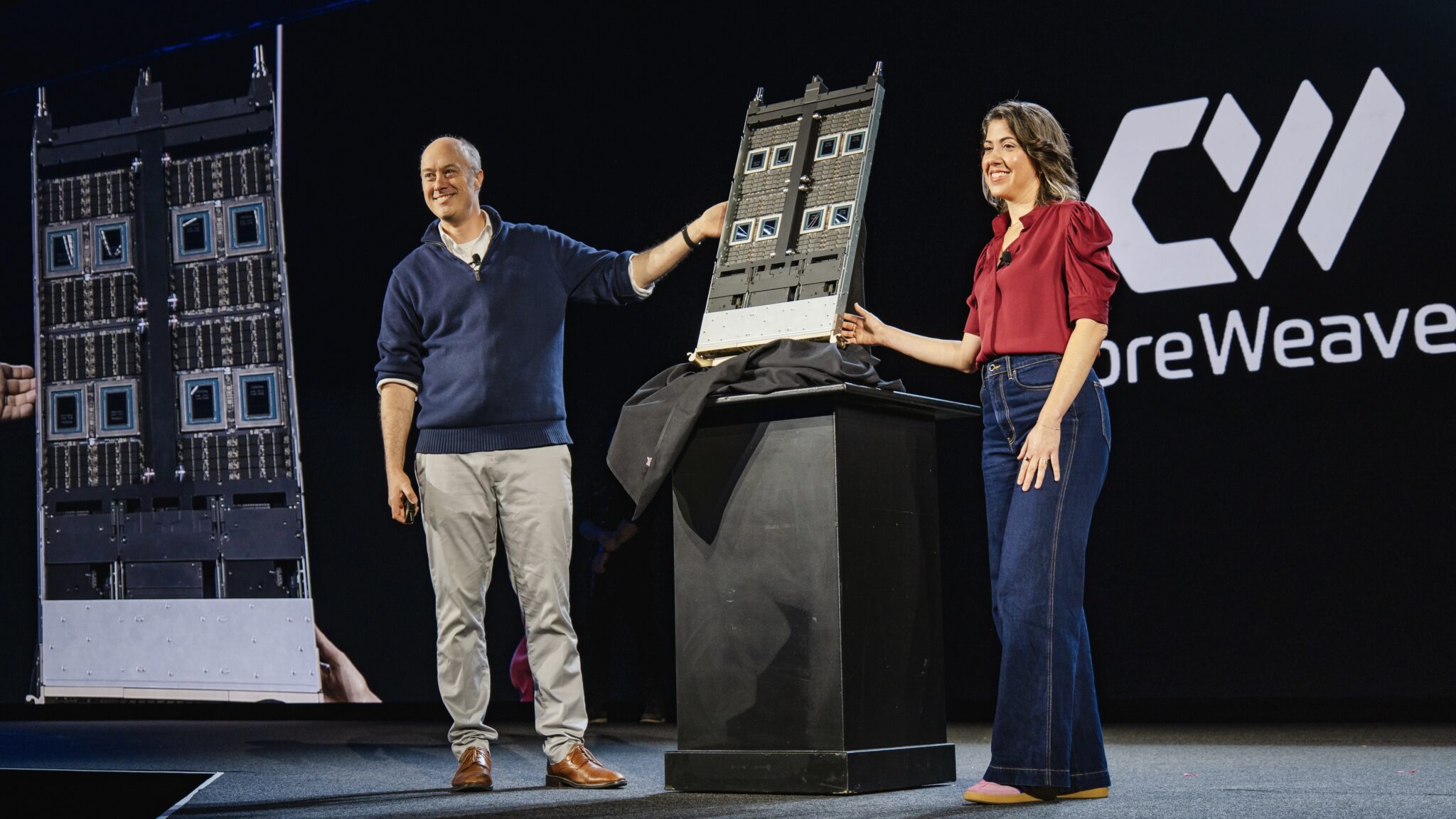
OpenAI’s new GPT‑6 “Astra Ultrafast” model is now available in the OpenAI API and for eligible ChatGPT Work and Codex users, running exclusively on NVIDIA’s Blackwell GPUs. Leveraging inference optimizations that tap into Blackwell’s architecture, the model delivers up to 8× faster inference latency compared to prior GPT‑6 variants. This performance boost comes at the cost of requiring Blackwell‑compatible hardware, limiting access to users with the necessary GPU infrastructure. Engineers can immediately start using the model by specifying the model name in their API calls, but must ensure their deployment environment supports Blackwell GPUs to realize the speed gains.

When LLM judges agree, should we believe them?
· 5 min read· Aug 26, 2026

When LLM judges agree, should we believe them?

When several LLM judges produce highly correlated

Building an AI Text Detector From Scratch
· 3 min read· Aug 15, 2026

Building an AI Text Detector From Scratch

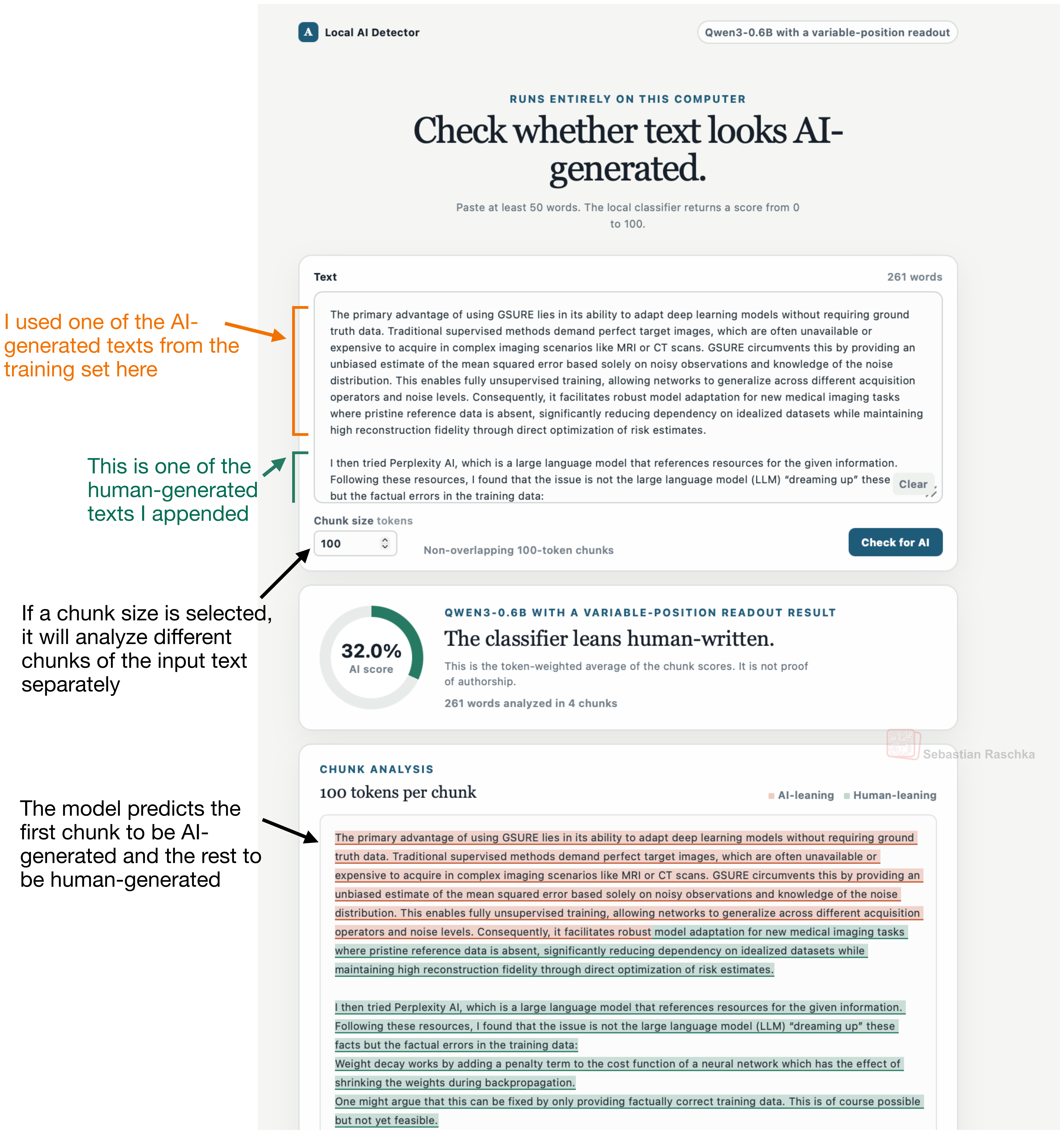
The article discusses building an AI text detector from scratch, with the goal of explaining how AI detectors work and using it as a verifier to train a small language model to produce text that avoids detection. The detector will be built using a method similar to Pangram models, which is behind Substack's AI detection feature, and will return a 0-100 score indicating the likelihood of the text being AI-generated. The project aims to illustrate the limitations of AI detectors and explore a verifier-based LLM application. The practical implication for engineers building AI systems is that they can use this approach to develop their own AI detectors and improve their understanding of AI-generated text.

How to Make Your Own JEV Model from an Open LLM
· 4 days ago

How to Make Your Own JEV Model from an Open LLM

The article demonstrates how to convert a small open‑source Qwen language model into a fast, single‑pass text classifier by replacing its language‑modeling head with a classification head. By swapping the head and fine‑tuning only the new layers, the resulting JEV model achieves inference speeds comparable to lightweight classifiers while retaining the expressive power of Qwen. This approach eliminates the need for large‑scale training of a new model from scratch, offering a pragmatic path to production‑ready text classification. The authors emphasize that the new classifier can be deployed with minimal latency overhead, making it suitable for real‑time inference workloads.

IBM allows on-prem deployment of its Bob agentic development platform
· Today

IBM allows on-prem deployment of its Bob agentic development platform

IBM has added a self‑hosted deployment option for its Bob agentic development platform, enabling enterprises to run the AI‑driven software‑building system entirely on their own infrastructure. Bob remains an agentic platform that guides developers through code generation and modernization, but the new on‑prem release supports private‑cloud and sovereign‑cloud environments, giving customers full control over data residency and compliance. The move positions IBM as a competitor to cloud‑only agentic services, though it requires customers to provision and maintain the underlying compute and storage layers themselves.

With a feel for physics, AI models simulate a wider range of real-world scenarios
· 5 min read· Aug 10, 2026

With a feel for physics, AI models simulate a wider range of real-world scenarios

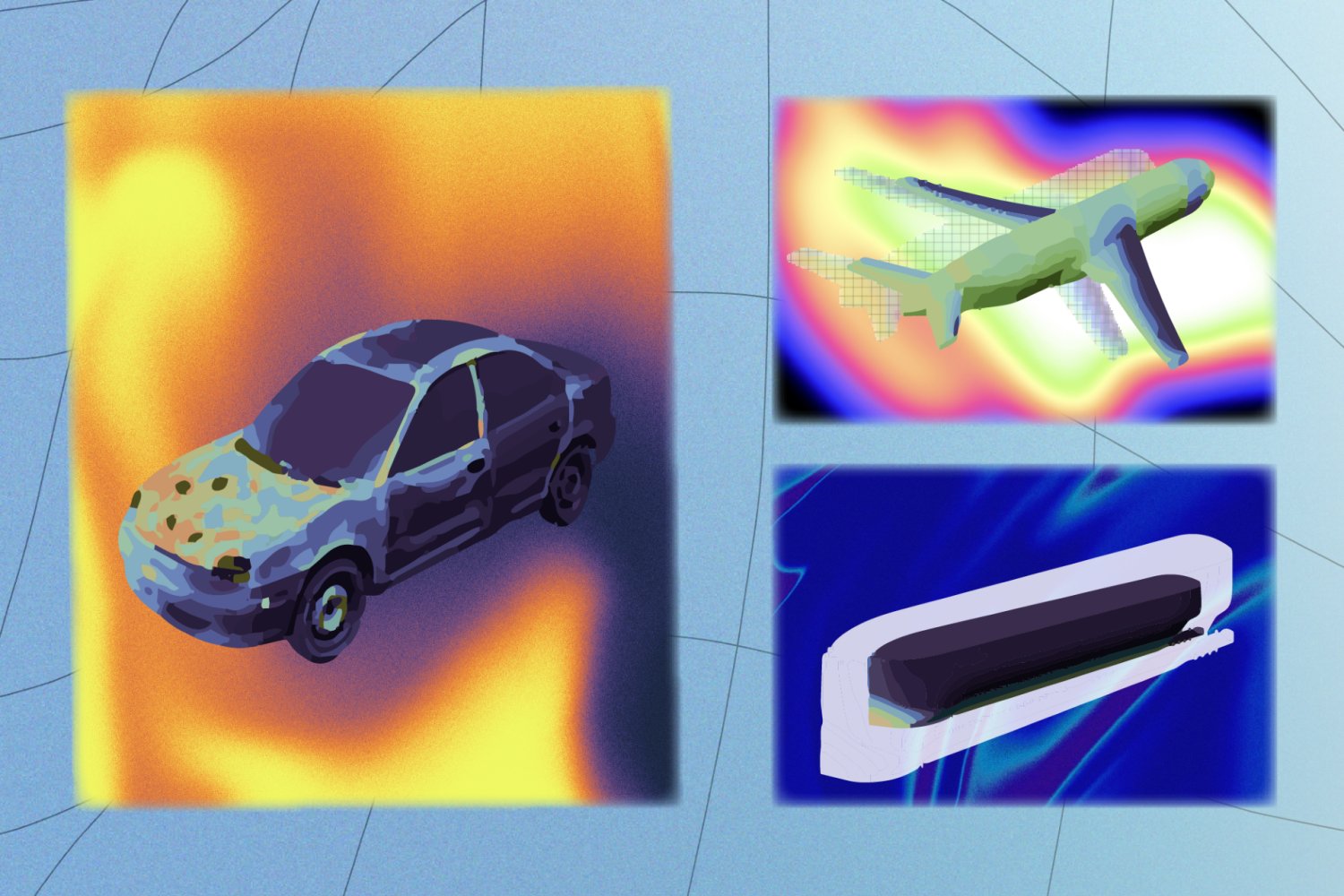
Researchers at MIT's CSAIL and Tsinghua University have developed a new pre-training approach called GeoPT, which enables simulation models to learn physics in a broader and more efficient way, allowing them to model the real world more accurately and train on up to 60% less data. GeoPT uses synthetic dynamics, a series of interactions between small particles and complex 3D shapes, to give models a sense of how physics works. This approach can help engineers predict how vehicles, everyday items, and robots respond to various physical elements, such as wind, water, and collisions. The practical implication for engineers building AI systems is that GeoPT can accelerate the development of more realistic and accurate simulations, enabling the creation of more reliable and efficient AI models.

A decade of mathematical certainty: Reflections on the Automated Reasoning Group
· 8 min read· Aug 11, 2026

A decade of mathematical certainty: Reflections on the Automated Reasoning Group

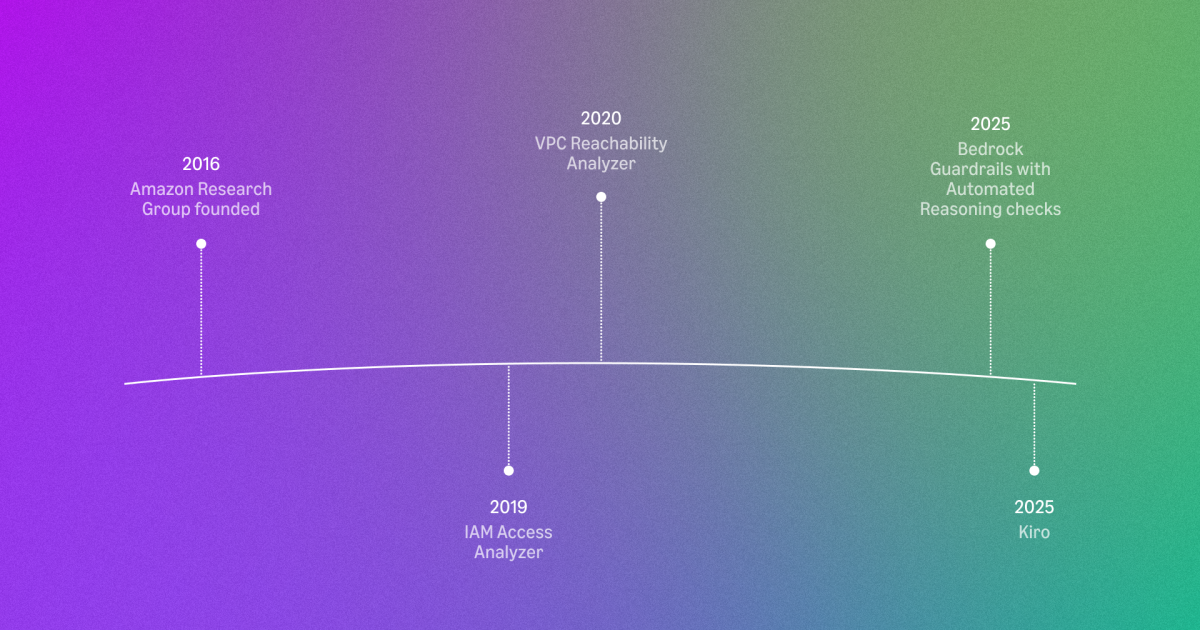
The Automated Reasoning Group (ARG) at Amazon has made significant progress over the past decade in applying mathematical logic and formal verification techniques to prove the correctness and security of AWS systems. The group's production services now process billions of queries daily, and their work has led to the development of tools such as Tiros, Zelkova, and Lean, which are used to analyze network security, policies, and cryptographic protocols. The use of automated reasoning and proof assistants has enabled the group to prove the correctness of complex systems, including the Nitro Confidentiality Engine and the AWS policy interpreter. This work has had a significant impact on the security and reliability of AWS systems, and its practical implications for engineers building AI systems include the potential to apply similar techniques to ensure the correctness and security of AI mod

GraphRAG with TypeSafe Jev: A System One Approach to Scalable Knowledge Graphs
· 5 days ago

GraphRAG with TypeSafe Jev: A System One Approach to Scalable Knowledge Graphs

The article introduces GraphRAG combined with the TypeSafe Jev framework as a “System One” architecture for scalable knowledge graphs. It shows that calibrated decision models can absorb high‑frequency graph traversal tasks, freeing LLMs to concentrate on reasoning, synthesis, and open‑ended generation. By decoupling graph logic from the language model, the approach reduces inference latency and improves throughput for graph‑centric workloads. The trade‑off

Always-on AI agents turn infrastructure into a continuous learning loop
· Today

Always-on AI agents turn infrastructure into a continuous learning loop

Cognition AI Inc.’s Devin is an always‑on AI agent that continuously cycles through inference, feedback, and training, creating a continuous learning loop that spans the entire software development lifecycle—from planning and code generation to code review and production issue resolution. By embedding Devin into the development pipeline, teams can receive real‑time guidance and automated fixes while simultaneously feeding new data back into the model for incremental retraining. The approach trades off higher inference costs for faster iteration cycles and more resilient production systems.

Uplifting conversion across the acquisition funnel with personalization using contextual bandits on AWS
· 16 min read· Today

Uplifting conversion across the acquisition funnel with personalization using contextual bandits on AWS

Amazon Payments leveraged a multi-objective contextual bandit algorithm in Amazon SageMaker AI to personalize its acquisition funnel, delivering a high single‑

RAG vs. Fine-Tuning for Domain Adaptation: When to Use Which
· Sep 23, 2026

RAG vs. Fine-Tuning for Domain Adaptation: When to Use Which

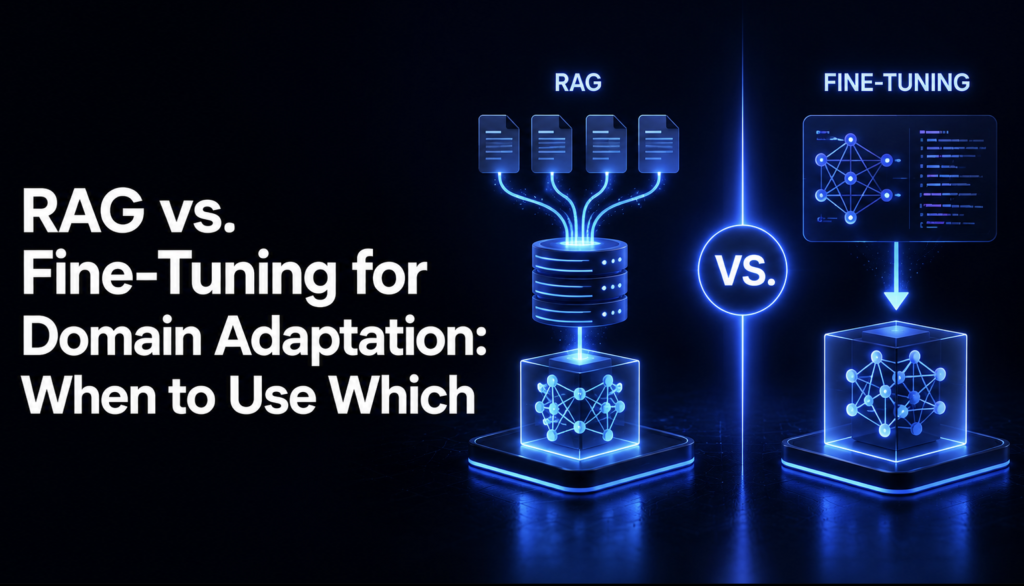
The article contrasts retrieval‑augmented generation (RAG) with fine‑tuning for domain adaptation, outlining when each method is preferable. It explains that RAG injects up‑

AWS Trainium Frontier competition: Co-design models and kernels on purpose-built AI chips
· 6 min read· Aug 10, 2026

AWS Trainium Frontier competition: Co-design models and kernels on purpose-built AI chips

The AWS Trainium Frontier competition invites researchers to co-design models and kernels on purpose-built AI chips, exploring the efficient frontier of model architectures on AWS Trainium. The competition provides a ~50M parameter baseline language model and challenges participants to modify everything, including architecture, optimizer, training loop, and custom NKI kernels, to optimize the model architecture and training throughput within a fixed time and compute budget. The goal is to find the balance between model capacity and training throughput, driving validation bits-per-byte low and downstream in-context learning capability high. The optimal architectures will differ from those designed for existing accelerators due to Trainium's unique hardware features. The practical implication for engineers building AI systems is the opportunity to discover new model architectures designed

Building ambient agents with Amazon Bedrock AgentCore: From event-driven signals to human-in-the-loop workflows
· 34 min read· Today

Building ambient agents with Amazon Bedrock AgentCore: From event-driven signals to human-in-the-loop workflows

Amazon Bedrock AgentCore now supports ambient agents that react to events like S3 uploads, scheduled triggers, or alerts, enabling real‑time, event‑driven AI workflows without a chat prompt. The framework‑agnostic design uses Amazon SQS, AWS Lambda, and Amazon DynamoDB to orchestrate these agents, while a single `ask_human` tool lets the system pause and request human input when needed. By integrating these services, developers can build scalable, human‑in‑the‑loop pipelines that automatically process data streams and trigger LLM actions. The approach trades off a modest increase in latency for robust, observable event handling and auditability.

Monitoring Embedding Drift in Production Scikit-LLM Pipelines
· Sep 22, 2026

Monitoring Embedding Drift in Production Scikit-LLM Pipelines

The article explains embedding drift—changes in vector representations over time—and why it can undermine the reliability of large language model (LLM) pipelines in production. It focuses on scikit‑

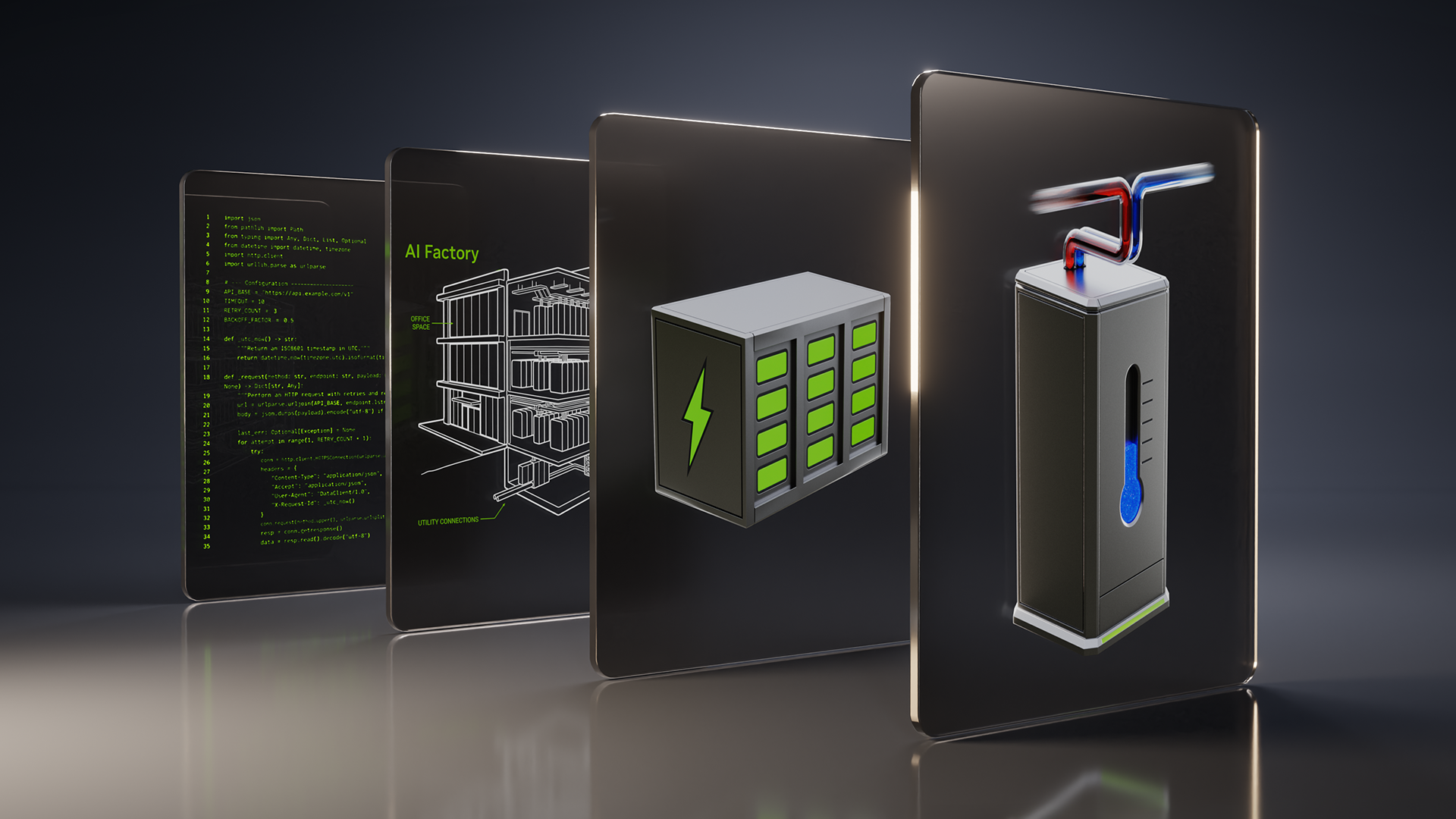
NVIDIA Launches DSX Ready to Qualify Power and Cooling Products for AI Factories
· 4 min read· Sep 21, 2026

NVIDIA Launches DSX Ready to Qualify Power and Cooling Products for AI Factories

NVIDIA has announced the DSX platform, a qualification framework for power and cooling solutions tailored to AI factories. The initiative emphasizes aligning cooling, water, and grid infrastructure with the specific compute architecture of AI workloads, addressing constraints that arise as AI infrastructure scales. By ensuring that power and cooling components meet DSX standards, builders can more reliably convert raw computing capacity into operational AI services. The move signals a push toward more integrated, factory‑level design practices that reduce downtime and optimize energy efficiency.

Equals Money lets customers’ AI tools read data but not move money
· 2 days ago

Equals Money lets customers’ AI tools read data but not move money

Equals Money introduces a Model Context Protocol (MCP) server that lets fintech customers’ AI tools access transaction data while preventing any money‑moving capabilities. The solution hinges on tight agent identification, comprehensive logging, and strict identity‑provider enforcement to stop rogue agents from initiating payments. By separating data access from transaction execution, the platform delivers a secure, auditable workflow for AI‑driven analytics without exposing funds. The trade‑off is an added layer of infrastructure that requires careful integration with existing identity services and monitoring pipelines.

How uniopen customized Amazon Nova to their retail moderation policies for production deployment
· 9 min read· Yesterday

How uniopen customized Amazon Nova to their retail moderation policies for production deployment

Uniopen leveraged Amazon Nova 2 Lite as the foundation for its retail content‑moderation system, applying supervised fine‑tuning inside Amazon SageMaker AI to align the model with its specific policy requirements. Prompt optimization was then used to further steer responses toward the desired moderation outcomes, while a series of business‑relevant evaluation and release gates ensured that only high‑quality outputs entered production. The result was a policy‑compliant moderation pipeline that could be deployed at scale via SageMaker endpoints, with clear checkpoints to maintain quality before live use.

Why Deploying Physical AI at Scale Demands Safety at Every Layer
· 6 min read· Sep 21, 2026
Why Deploying Physical AI at Scale Demands Safety at Every Layer

The article argues that scaling physical AI—specifically autonomous vehicles and industrial robots—requires a safety architecture layered at every system level. It cites ABI Research’s projection of 49 million level 3‑5 AVs by 2035 and Omdia’s estimate of 60 million industrial robots deployed by 2035, underscoring the urgency of robust safety mechanisms. The authors detail how safety must be baked into perception, decision, and actuation layers, noting that adding redundancy can double latency but is essential for compliance. They conclude that without a formal safety framework, the cost of failure in production deployments will far outweigh performance gains.

Query claims in natural language with Amazon Bedrock Knowledge Bases
· 15 min read· 2 days ago

Query claims in natural language with Amazon Bedrock Knowledge Bases

The article demonstrates how to build a conversational claims assistant using Amazon Bedrock Knowledge Bases, leveraging the AgenticRetrieveStream API to answer natural‑language queries with citations. It walks through ingesting claim documents from Amazon S3, indexing them into a Bedrock KB, and then querying with multi‑turn support, metadata filters, and streamed responses. The approach shows how to combine Bedrock’s retrieval‑augmented generation with agentic streaming for a fully interactive, citation‑aware assistant. The key tradeoff highlighted is the need to pre‑index documents into Bedrock, which adds an ingestion step but yields low‑latency, citation‑rich answers.

Build And Understand a Vector Database From Scratch in 10 Easy Steps
· Sep 18, 2026

Build And Understand a Vector Database From Scratch in 10 Easy Steps

The article walks readers through 10 incremental steps to build a vector database from scratch in Python, covering data ingestion, indexing, query processing, and persistence. It demonstrates how to implement a simple vector similarity search engine using basic Python data structures, offering a clear, hands‑on blueprint for prototyping retrieval components before scaling to production. While the implementation is lightweight and easy to understand, it trades off performance and scalability for educational clarity, making it ideal for early-stage experimentation and learning.

Build a multi-agent music production pipeline on Amazon Bedrock AgentCore Runtime Instances
· 16 min read· 2 days ago

Build a multi-agent music production pipeline on Amazon Bedrock AgentCore Runtime Instances

Amazon Bedrock AgentCore Runtime Instances enable a fully managed, GPU‑backed EC2 environment that supports multi‑agent workflows, persistent volumes, and multi‑day sessions. In the showcased example, three specialized agents—composer, producer, and mixer—are colocated on a single GPU instance, sharing a common filesystem to hand off audio assets and metadata. The pipeline demonstrates how to orchestrate agent interactions on Bedrock while keeping stateful data on persistent storage, trading off the convenience of a single‑node setup against the limited scalability of one GPU. The result is a production‑ready music

EXPLORE AI NEWS

Daily hand-picked stories on LLMs, RAG, agents and production AI — curated for engineers who ship.

BROWSE NEWS

GET THE WEEKLY DIGEST

Join engineers getting the Monday signal-over-noise AI breakdown. No spam, unsubscribe anytime.

LEARN AI ENGINEERING

Curated courses, research papers, repos and tutorials built for engineers leveling up in AI.

START LEARNING