Building an AI Text Detector From Scratch
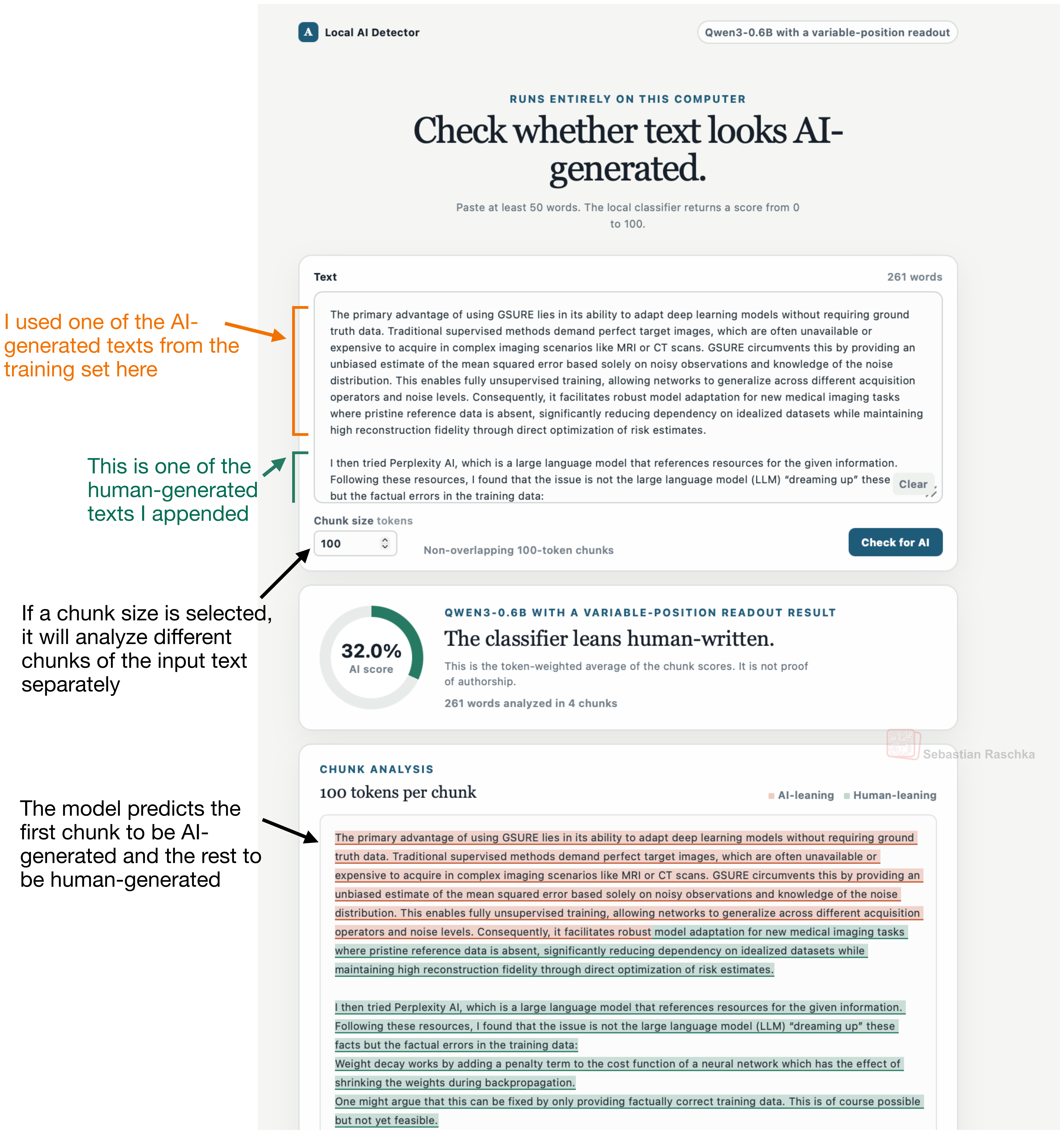
The article discusses building an AI text detector from scratch, with the goal of explaining how AI detectors work and using it as a verifier to train a small language model to produce text that avoids detection. The detector will be built using a method similar to Pangram models, which is behind Substack's AI detection feature, and will return a 0-100 score indicating the likelihood of the text being AI-generated. The project aims to illustrate the limitations of AI detectors and explore a verifier-based LLM application. The practical implication for engineers building AI systems is that they can use this approach to develop their own AI detectors and improve their understanding of AI-generated text.
⚡ Key Takeaways
- The AI detector will return a 0-100 score indicating the likelihood of the text being AI-generated.
- The method used is similar to Pangram models, which is behind Substack's AI detection feature.
- The detector can be used to filter out spammy content and improve personal writing without turning it into AI-generated text.
- The project aims to illustrate the limitations of AI detectors and explore a verifier-based LLM application.
- The detector will be built using a classifier with an estimated probability score.
The ability to detect AI-generated text is crucial for maintaining the integrity of written content, and engineers building AI systems can use this approach to develop their own AI detectors. By understanding how AI detectors work, engineers can improve their understanding of AI-generated text and develop more effective methods for detecting and mitigating its impact.
✅ Practical Steps
- Build a classifier with an estimated probability score to detect AI-generated text.
- Use a method similar to Pangram models to develop the AI detector.
- Train a small language model to produce text that avoids detection using the verifier-based LLM application.
Want the full story? Read the original article.
Read on Ahead of AI ↗