Monitoring Embedding Drift in Production Scikit-LLM Pipelines
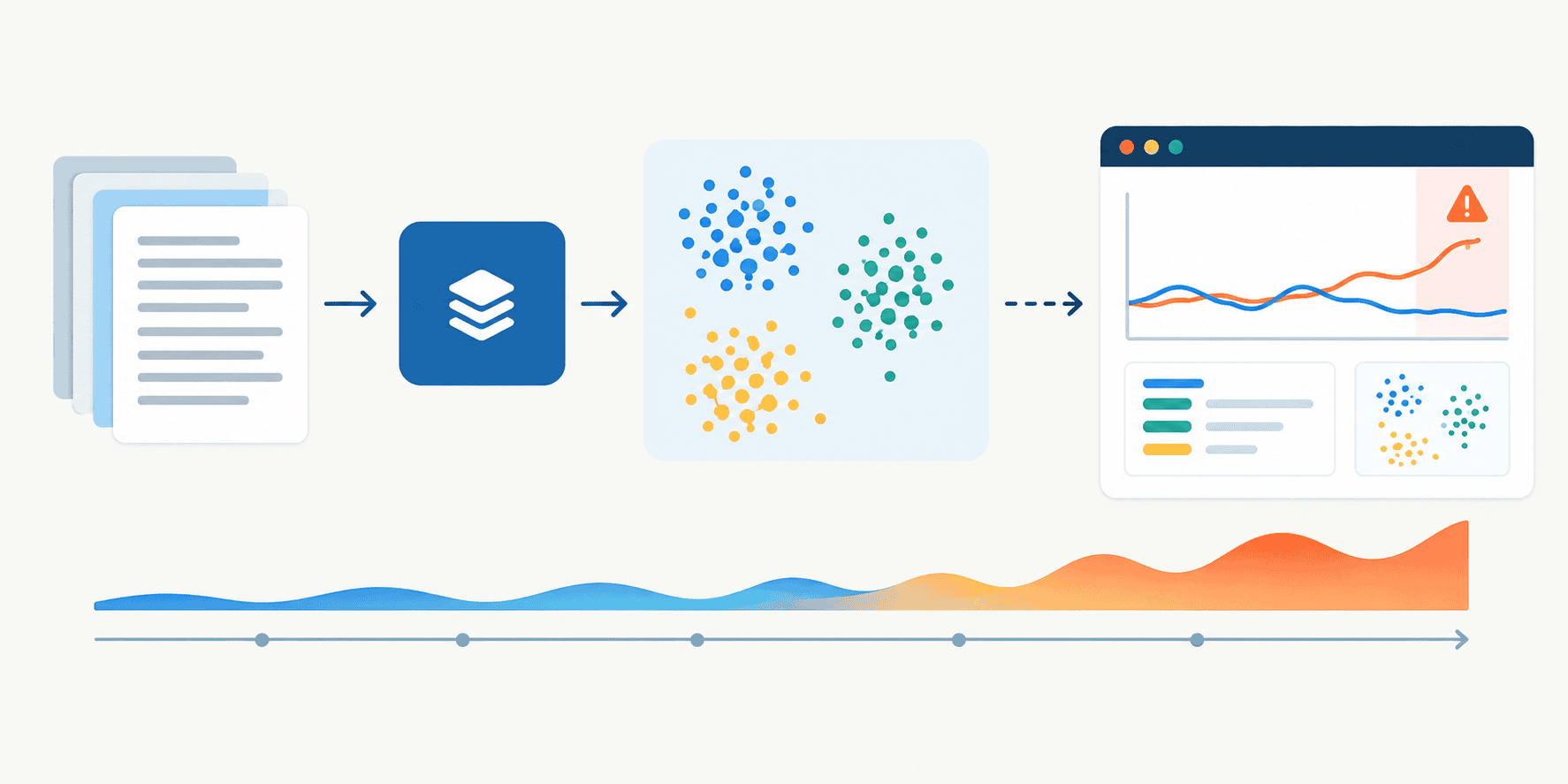
This article defines embedding drift as the degradation of vector representations over time in production large language model pipelines and explains why monitoring it is critical for maintaining model relevance. It presents two practical techniques for detecting drift in Scikit‑LLM‑based systems, detailing the required instrumentation and evaluation steps. Engineers are guided on integrating drift checks into existing monitoring stacks to proactively address data distribution shifts. Implementing these checks helps ensure consistent downstream performance of LLM‑driven applications.
⚡ Key Takeaways
- Embedding drift is described as the change in vector similarity distributions caused by evolving input data or model updates.
- The article recommends using statistical distance metrics (e.g., KL divergence) on embedding distributions to flag drift.
- Monitoring drift adds runtime overhead but enables early detection of performance degradation before it impacts end‑users.
- Integration is done by instrumenting Scikit‑LLM pipelines to log embeddings and compute the chosen distance metric on a rolling window.
- A prerequisite is that the production pipeline already outputs embeddings via Scikit‑LLM; otherwise the monitoring hooks cannot be attached.
🔧 Tools & Libraries
Detecting embedding drift lets engineers catch subtle model performance drops early, reducing costly rollbacks and preserving user experience in live LLM services.
✅ Practical Steps
- Instrument your Scikit‑LLM pipeline to capture and store output embeddings for each request.
- Compute a statistical distance (e.g., KL divergence) between the current embedding distribution and a baseline reference window on a scheduled basis.
- Trigger alerts or automated retraining pipelines when the distance exceeds a predefined threshold.
Want the full story? Read the original article.
Read on Machine Learning Mastery ↗