RAG vs. Fine-Tuning for Domain Adaptation: When to Use Which
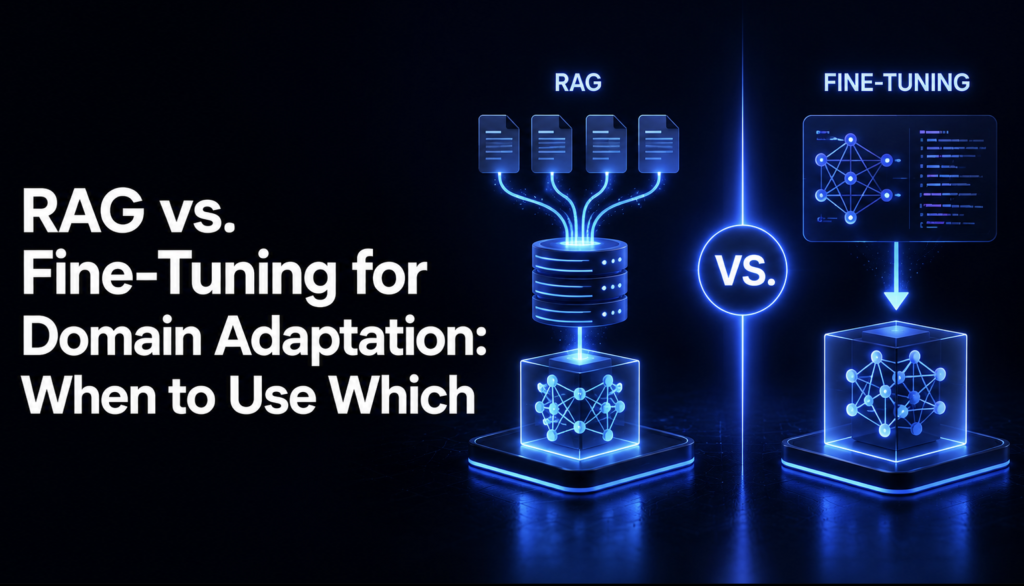
This article contrasts retrieval-augmented generation (RAG) with fine‑tuning as domain adaptation strategies, outlining the mechanical differences and guiding engineers on when each approach is appropriate. It explains that RAG leverages external knowledge sources at inference time, while fine‑tuning embeds domain knowledge directly into model weights. The piece provides a decision framework for selecting the right technique based on factors such as data availability, latency requirements, and maintenance overhead, helping practitioners choose the optimal path for their AI products.
⚡ Key Takeaways
- Apply the concepts from this article to your own system design.
Understanding the trade‑offs between RAG and fine‑tuning lets engineers build more cost‑effective, maintainable, and performant domain‑specific AI solutions without unnecessary model retraining.
✅ Practical Steps
- Apply the concepts from this article to your own system design.
Want the full story? Read the original article.
Read on Machine Learning Mastery ↗