Why Scaling AI Compute Performance Requires a New Power Architecture
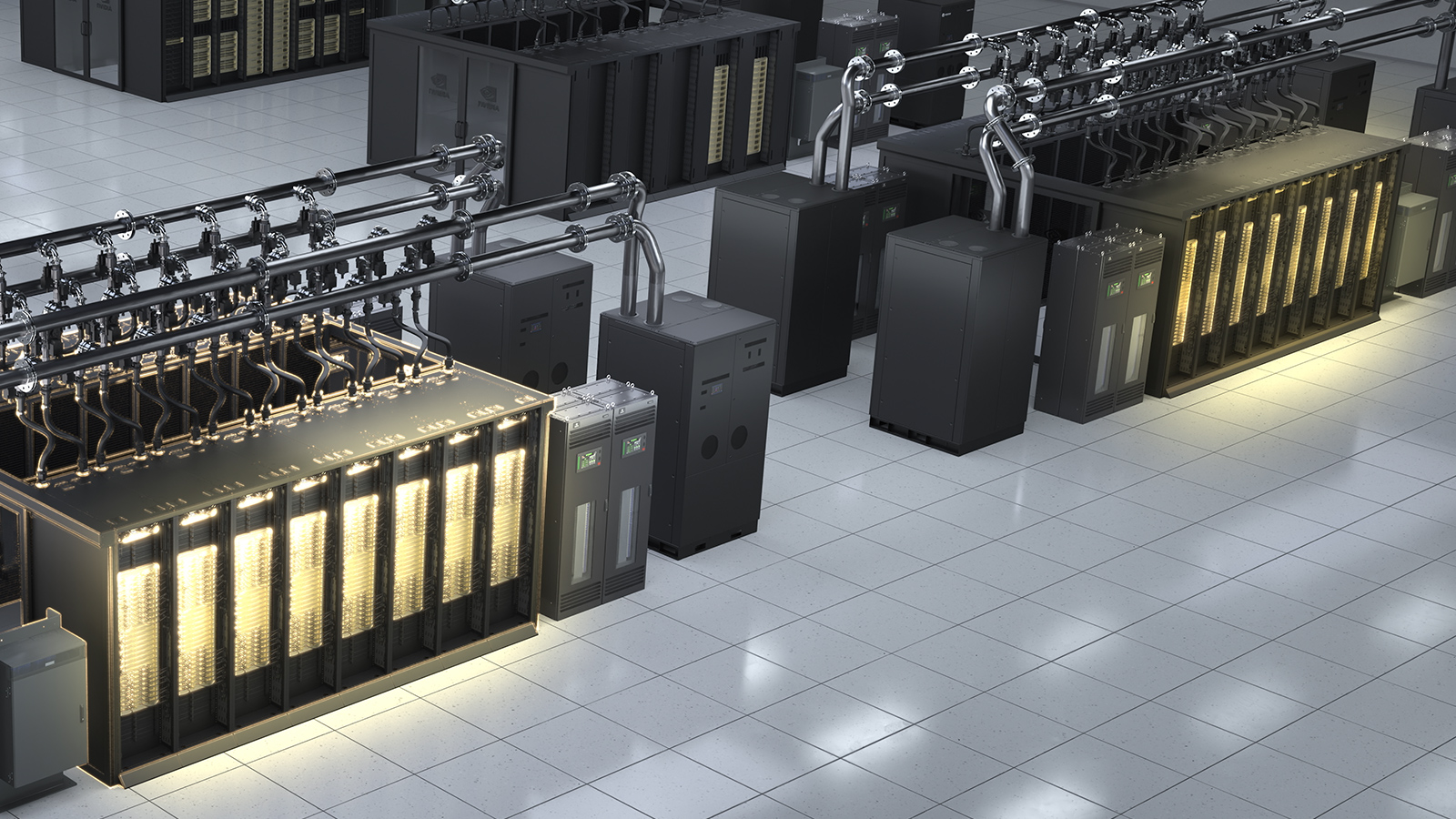
The increasing demand for AI compute performance requires a new power architecture, with 800 VDC simplifying the power delivery path and reducing inefficiencies. NVIDIA, Google, and Microsoft have developed the 800 VDC architecture through the Open Compute Project, publishing a joint white paper and specification. The new architecture provides a roadmap for AI factories to scale, with on-ramps at every stage of growth, including hybrid-compatible power racks, row power centers, and DC power blocks. This development has significant implications for engineers building AI systems, as it enables higher compute density and more efficient power distribution.
⚡ Key Takeaways
- 800 VDC architecture simplifies power delivery and reduces inefficiencies.
- NVIDIA DSX reference designs guide AI factories through the transition to 800 VDC infrastructure.
- The NVIDIA MGX-compatible 800 VDC power rack enables hybrid architecture and delivers 800 VDC to compute racks within existing AC infrastructure.
- The row power center supports up to 2 megawatts per row and is expected to be available in 2027.
- The DC power block enables direct medium-voltage conversion at massive scale.
The 800 VDC architecture is crucial for engineers building AI systems as it enables higher compute density and more efficient power distribution, allowing for the development of more powerful AI models. This development has the potential to significantly impact the field of AI and machine learning, enabling faster and more efficient processing of large datasets.
✅ Practical Steps
- Evaluate the feasibility of implementing 800 VDC architecture in existing AI infrastructure.
- Consider the NVIDIA MGX-compatible 800 VDC power rack for hybrid architecture deployment.
- Plan for future upgrades to row power centers and DC power blocks for larger-scale AI deployments.
Want the full story? Read the original article.
Read on NVIDIA Blog ↗