Sakeena Fiza Helps NVIDIA Hardware Succeed at Scale
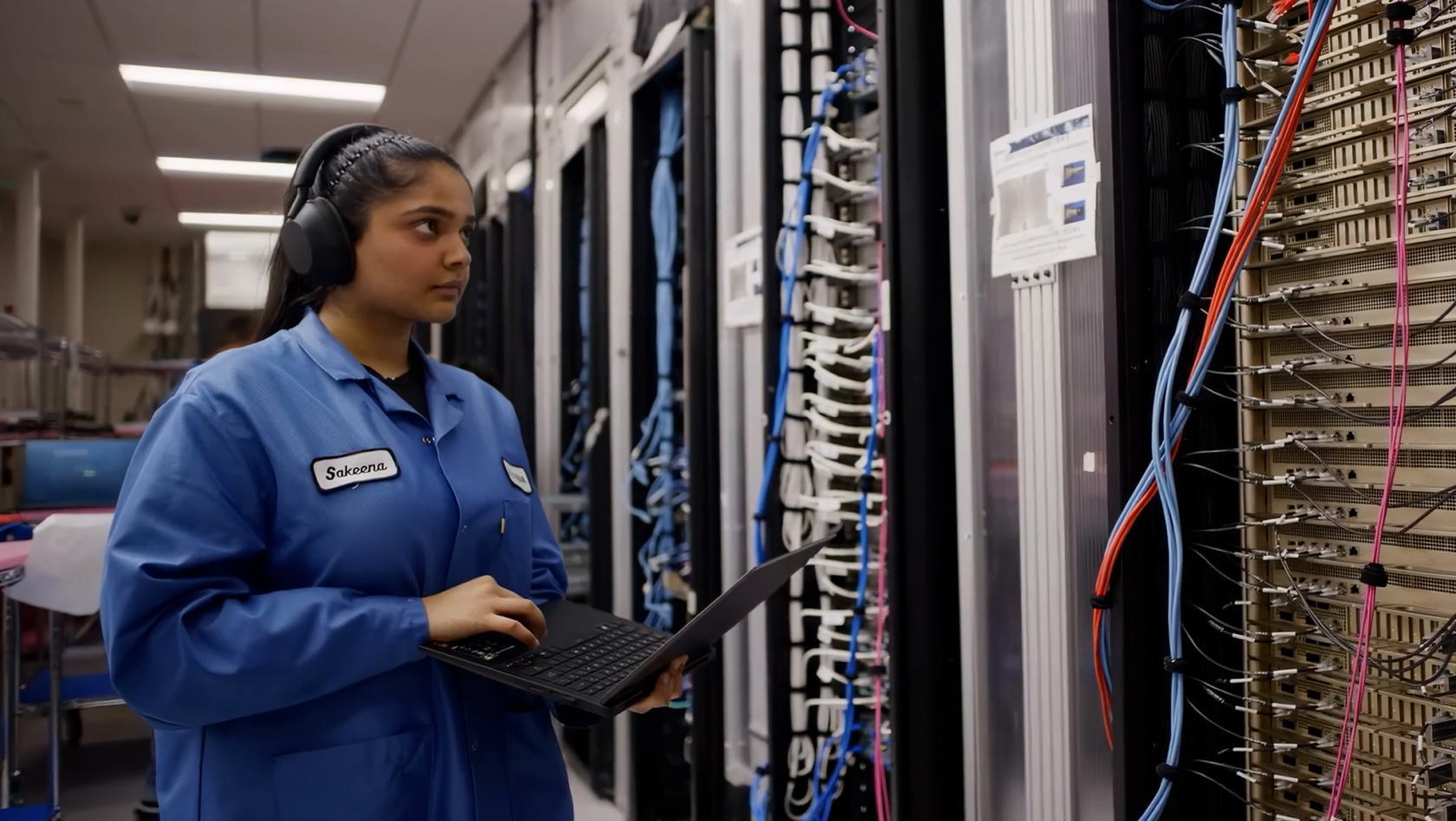
NVIDIA validation engineer Sakeena Fiza details how her team ensures new data‑center hardware—like the first Rubin GPU—functions reliably from lab bring‑up through production, probing failures that range from rack‑scale signaling issues to a single over‑tightened screw. She emphasizes exhaustive component testing (tens of thousands per board, up to half a million per rack) to catch defects before customers see them. This rigorous validation pipeline is critical for engineers building AI‑focused hardware that must operate at scale without costly field failures.
⚡ Key Takeaways
- The NVIDIA Rubin GPU was the first to enumerate at system level, triggering “cheering and celebrating” in the lab.
- Validation spans firmware, hardware, software, mechanical design, thermal behavior, and manufacturing.
- A single board may contain tens of thousands of components; a full rack can approach half a million components.
- Failures can stem from high‑speed signaling, thermal margins, power integrity, or even a screw tightened too far.
- Engineers reproduce issues, vary conditions, probe signals, and study scope shots to isolate root causes.
Early‑stage, exhaustive validation prevents costly field failures in AI data‑center deployments, protecting both performance guarantees and customer trust.
✅ Practical Steps
- Apply the concepts from this article to your own system design.
Want the full story? Read the original article.
Read on NVIDIA Blog ↗