Disaggregation Is a Thousand-GPU Problem
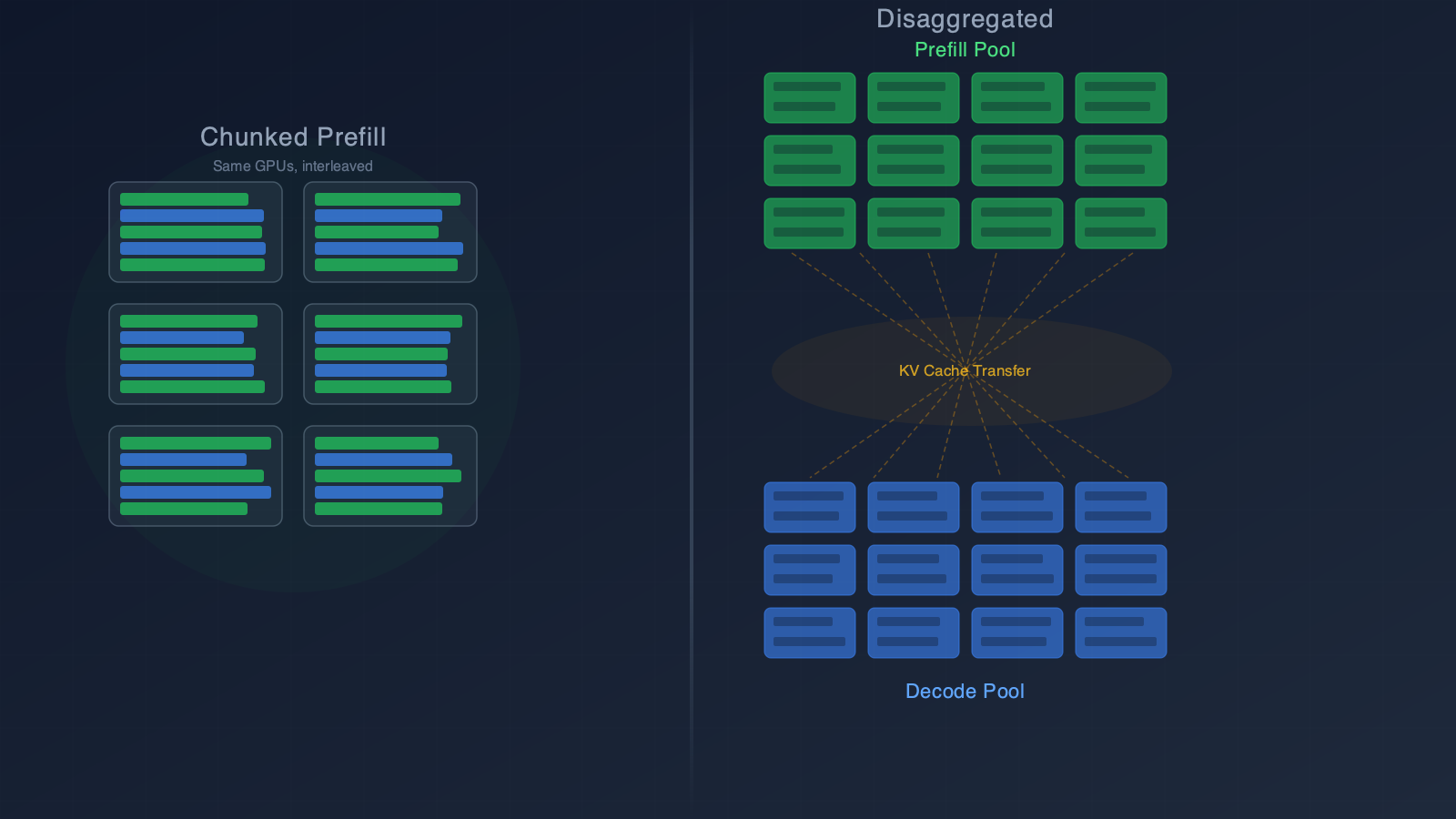
The article explains that splitting the prefill and decode phases of large‑language‑model inference only yields gains when three specific conditions are met; otherwise, the simpler chunked‑prefill strategy remains the better default. It highlights that the prefill‑decode split is most effective only at very large GPU scales, whereas chunked prefill keeps latency low and resource usage predictable for smaller clusters. The discussion clarifies that engineers should not blindly enable the split but should first verify that the workload satisfies the outlined criteria.
⚡ Key Takeaways
- The prefill‑decode split offers performance benefits only under three defined conditions that must be met before deployment.
- When those conditions are not satisfied, chunked prefill is the recommended default to maintain low latency.
- The tradeoff involves balancing GPU utilization against inference latency, with chunked prefill favoring consistent latency at the cost of slightly higher GPU usage.
- Integration requires configuring the inference pipeline to either enable the split or fall back to chunked prefill based on the cluster size and workload characteristics.
- WhyItMatters: Knowing when to split prefill and decode versus using chunked prefill can reduce inference latency and cost for production LLM services, especially at scale.
- TechnicalLevel: Intermediate
- TargetAudience: ML Engineers
- PracticalSteps:
- -
Knowing when to split prefill and decode versus using chunked prefill can reduce inference latency and cost for production LLM services, especially at scale.
Want the full story? Read the original article.
Read on Towards Data Science ↗