Understanding Positional Embeddings in Modern LLMs
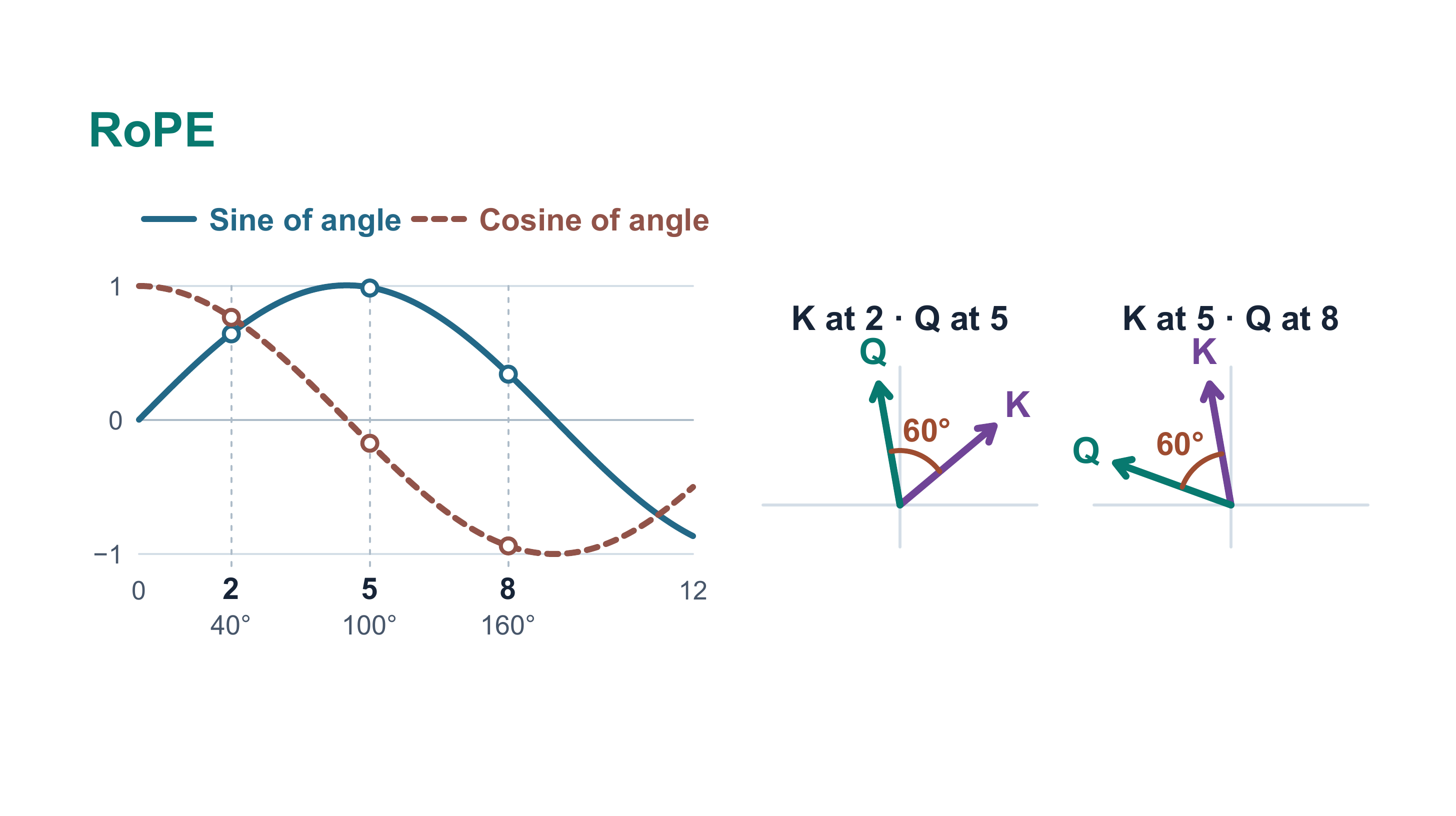
This article provides a deep dive into how modern large language models encode token position information, covering classic absolute embeddings, relative methods such as Rotary Positional Embedding (RoPE), and the ways recent 2026 open‑weight models adopt or drop explicit positional encodings. It includes visual explanations, mathematical derivations, and a small PyTorch implementation to illustrate the mechanisms. The piece also previews a gallery of 2026 architectures grouped by their positional encoding choices, linking the discussion to upcoming LLM architecture trend analyses. Engineers gain concrete reference material for implementing or modifying positional embeddings in their own transformer models.
⚡ Key Takeaways
- RoPE (Rotary Positional Embedding) is highlighted as the primary relative positional method used in many recent open‑weight LLMs.
- Modern 2026 architectures are grouped by positional encoding type, showing some models that completely omit explicit positional encodings.
- The article supplies a minimal PyTorch implementation that demonstrates how to integrate RoPE into the attention computation.
- Positional embedding choices directly affect how query and key vectors are rotated, influencing model performance on longer contexts.
- The walkthrough assumes familiarity with basic transformer internals (query, key, value) and references a prior “Build a Large Language Model (From Scratch)” tutorial for foundational concepts.
🔧 Tools & Libraries
Understanding and correctly implementing positional embeddings is essential for engineers aiming to extend context length, improve training stability, or customize transformer architectures for specialized tasks.
✅ Practical Steps
- Follow the provided PyTorch code snippet to add RoPE to the attention module of an existing transformer implementation.
- Compare the behavior of models with absolute versus relative (RoPE) positional embeddings by swapping the embedding layer in the MiniMax-M3 example.
Want the full story? Read the original article.
Read on Ahead of AI ↗