Ian Buck Kicks Off NVIDIA’s Week at SC26 as Science Enters the Age of Agents
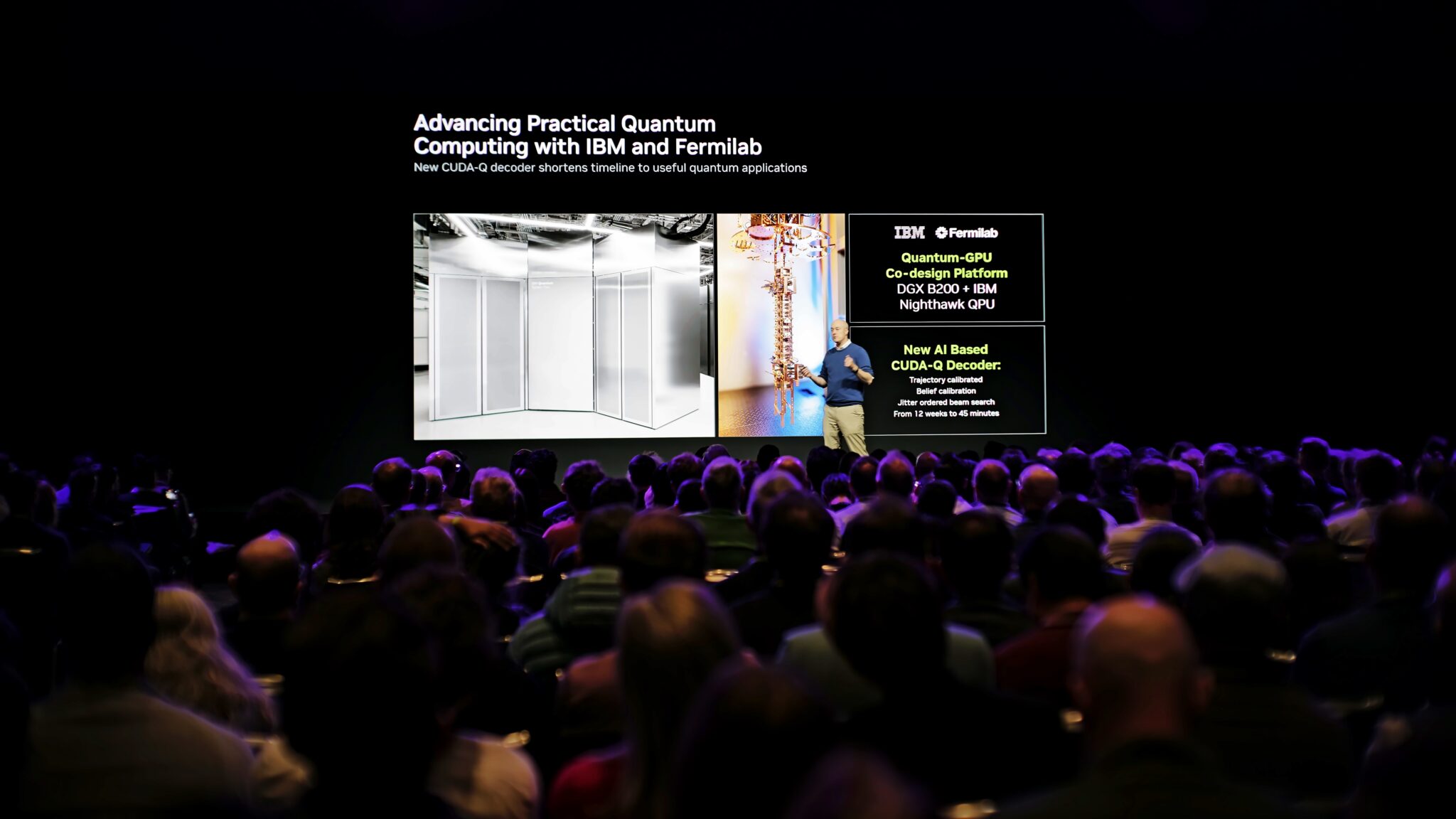
NVIDIA unveiled new AI agent tooling at SC26, including the Nemotron for Science model built on Nemotron 3.5 Super VL with a chemistry dataset, and showcased agents that autonomously plan experiments, run simulations, and fix software setups. Benchmarks highlighted an agent that repaired 81% of GROMACS test cases in one overnight DGX Spark run and another that accelerated a WRF routine over 5× using ~150 million tokens. These releases emphasize on‑premise data ownership and CPU‑centric agent loops, signaling a shift toward integrated simulation‑AI‑quantum workflows for scientific HPC.
⚡ Key Takeaways
- Nemotron for Science combines the Nemotron 3.5 Super VL model with an open chemistry dataset and post‑training recipes for life‑science workloads.
- Agents rely on CPUs for tool‑call execution between model steps, a design highlighted for the Agent Loop architecture.
- The GROMACS repair agent fixed 81% of test cases in a single overnight DGX Spark run.
- The Nsight AI Porting Agent achieved >5× speedup on a WRF routine using ~150 million tokens.
- The Rubin HPC GPU offers >50,000 CUDA cores (≈3× Hopper) and supports FP64‑FP4 precisions with sparse‑data acceleration.
Engineers can now deploy self‑driving scientific agents on existing on‑premise hardware, reducing manual workflow overhead while maintaining full data and model control, accelerating discovery cycles in HPC environments.
✅ Practical Steps
- Deploy Nemotron for Science on a DGX Spark, workstation, or on‑premise supercomputer as described.
- Integrate the Nsight AI Porting Agent to offload tool‑call steps to CPUs for GPU‑accelerated code migration.
Want the full story? Read the original article.
Read on NVIDIA Blog ↗