Could AI tell you where you left your keys?
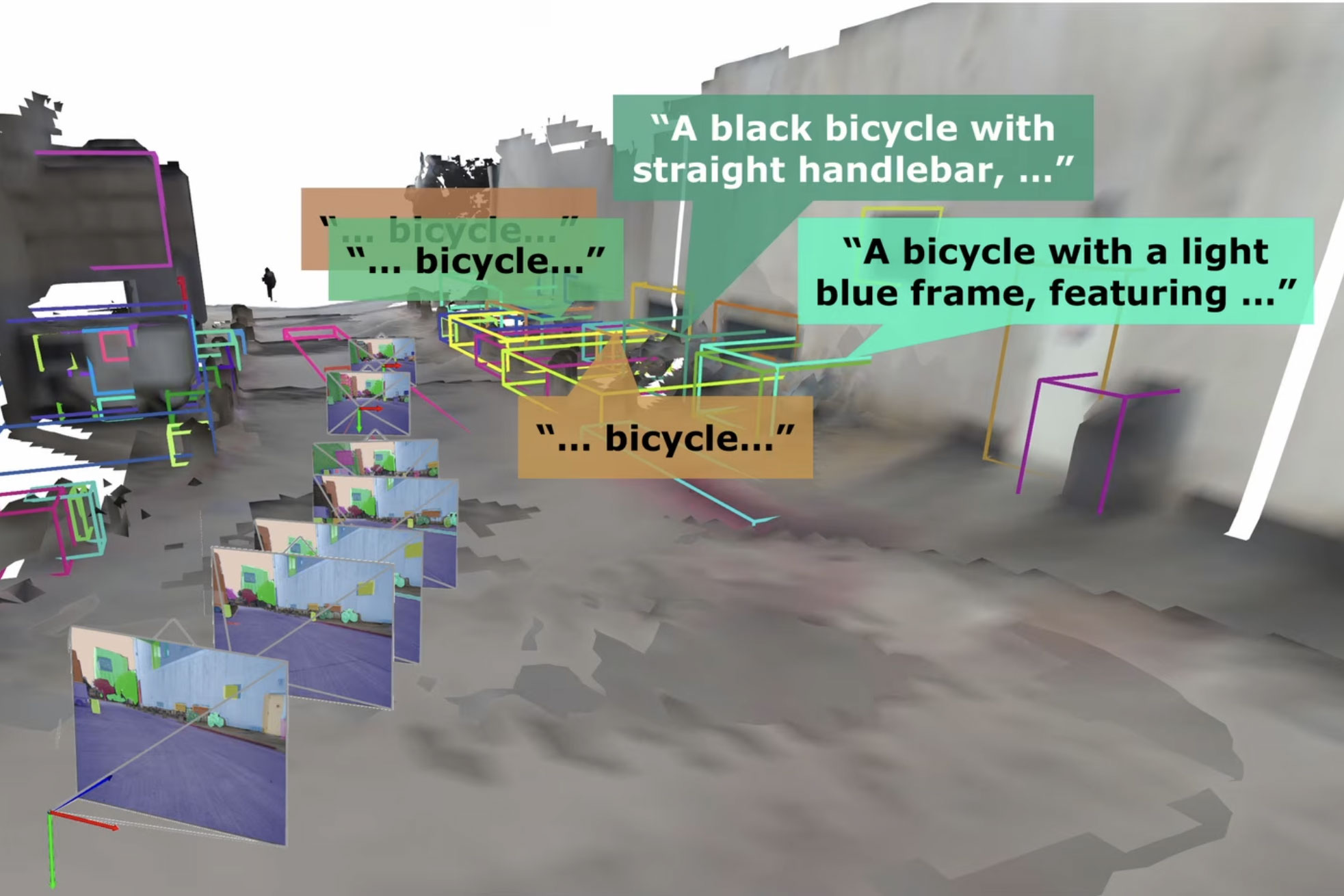
MIT researchers have developed a long-term memory framework called Describe Anything, Anywhere, Anytime, at Any Moment (DAAAM) that enables robots to rapidly form and recall a detailed mental model of complicated, large-scale environments. This framework combines advanced map representations with rich descriptions of the environment, allowing robots to quickly access this memory to answer complex queries about their environment in plain language. The DAAAM method runs fast enough for a mobile robot to use in real-time and has potential applications in robotics, augmented reality systems, and wayfinding. This advance could allow robots to work side-by-side with humans and interact better with them by reasoning about time and space in the same way humans do.
⚡ Key Takeaways
- The DAAAM method answers questions more accurately than state-of-the-art methods.
- The framework combines multimodal computer vision models with robotic mapping frameworks to create a spatiotemporal memory.
- The method allows robots to attach rich descriptions to objects they see as they traverse their environment.
- The DAAAM method has potential applications in augmented reality systems and wayfinding.
- The framework runs fast enough for a mobile robot to use in real-time.
The development of the DAAAM method has significant implications for engineers building AI systems that interact with humans, as it enables robots to reason about time and space in a more human-like way. This could lead to more effective human-robot collaboration and improved performance in tasks such as wayfinding and anomaly detection.
✅ Practical Steps
- Apply the DAAAM method to develop robots that can rapidly form and recall detailed mental models of complicated environments.
- Integrate the DAAAM framework with existing robotic systems to improve their ability to interact with humans and reason about time and space.
- Explore potential applications of the DAAAM method in augmented reality systems and wayfinding.
Want the full story? Read the original article.
Read on MIT News AI ↗