Towards Data Science
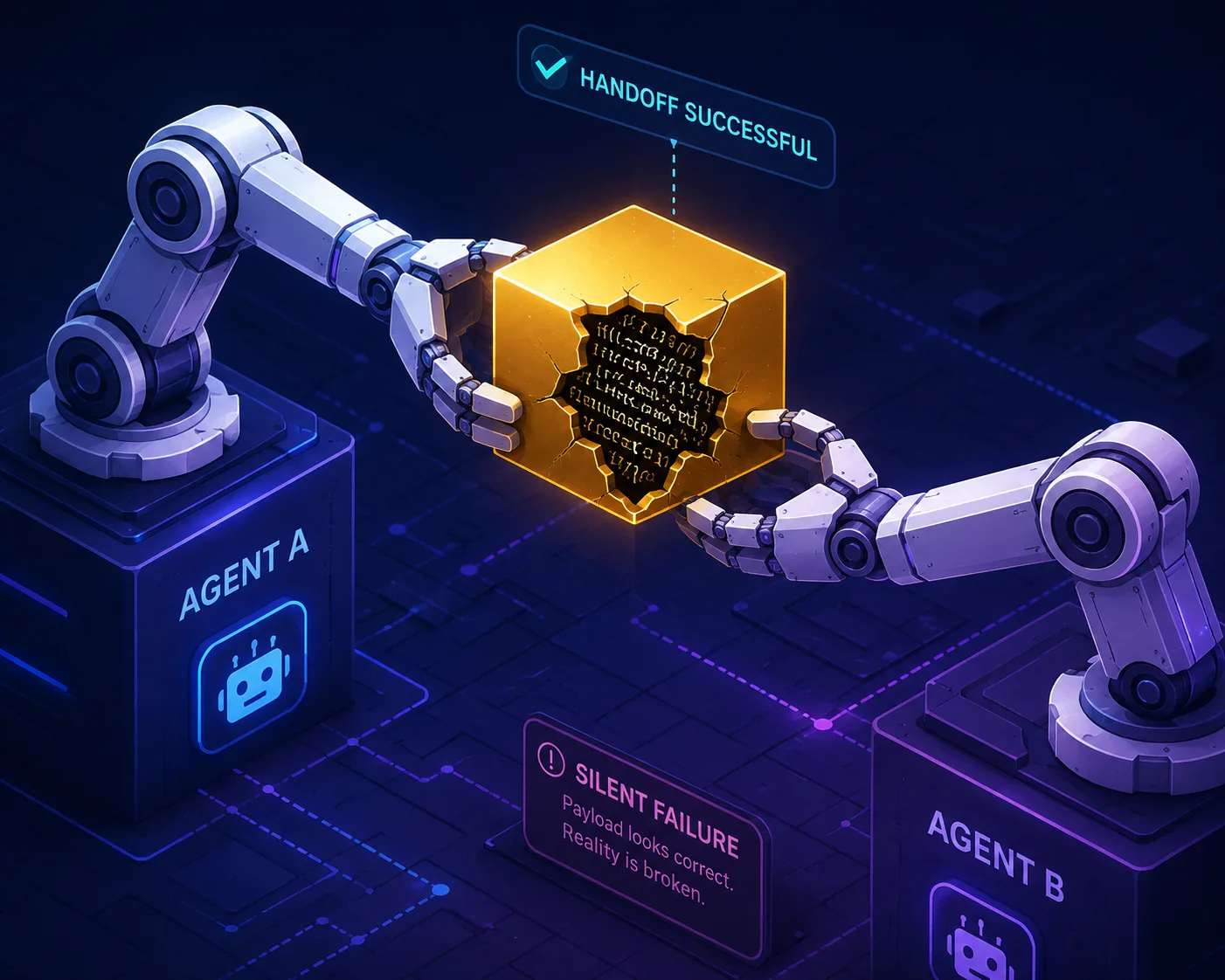
Why Most Multi-Agent Systems Fail Even When Evaluation Passes
Level:Intermediate
For:ML Engineers
✦TL;DR
The article discusses a watchdog pattern in Python to detect payloads that appear correct but are actually flawed in multi-agent systems, highlighting why many such systems fail despite passing evaluations. It emphasizes the need for runtime validation beyond static evaluation results. Engineers can adopt this pattern to improve reliability of agent interactions.
⚡ Key Takeaways
- The watchdog pattern is used to catch seemingly correct but incorrect payloads in multi-agent workflows.
- Implementing runtime checks in Python can prevent silent failures that pass evaluation metrics.
- Relying solely on evaluation passes can lead to hidden bugs that only surface during production.
- Integrating a watchdog requires adding validation logic around agent message handling.
- The approach assumes agents are built in Python and that payload structures are known.
💡 Why It Matters
Adding a watchdog layer helps production AI engineers catch subtle integration bugs that standard evaluations miss, reducing downtime and debugging effort.
✅ Practical Steps
- Insert a watchdog validation function in your Python agent code to inspect incoming payloads before processing.
- Raise exceptions or log detailed errors when the watchdog detects inconsistencies, preventing downstream failures.
Want the full story? Read the original article.
Read on Towards Data Science ↗More like this
New in AWS Quick: More capable flows, an updated web experience, and agents that work together
AWS ML Blog•#agents
How Google Duplex evolved to also call businesses for you in Gemini
Google Research•#agents
Genie ZeroOps, now in public beta: An autonomous agent that fixes data pipelines, with lessons from 80,000 customer issues
Databricks Blog•#agents
Towards a Science of Capable Autonomous Agents & Provable Safety — Part II
CMU ML Blog•#agents