AI helps researchers investigate how thousands of medical studies share code
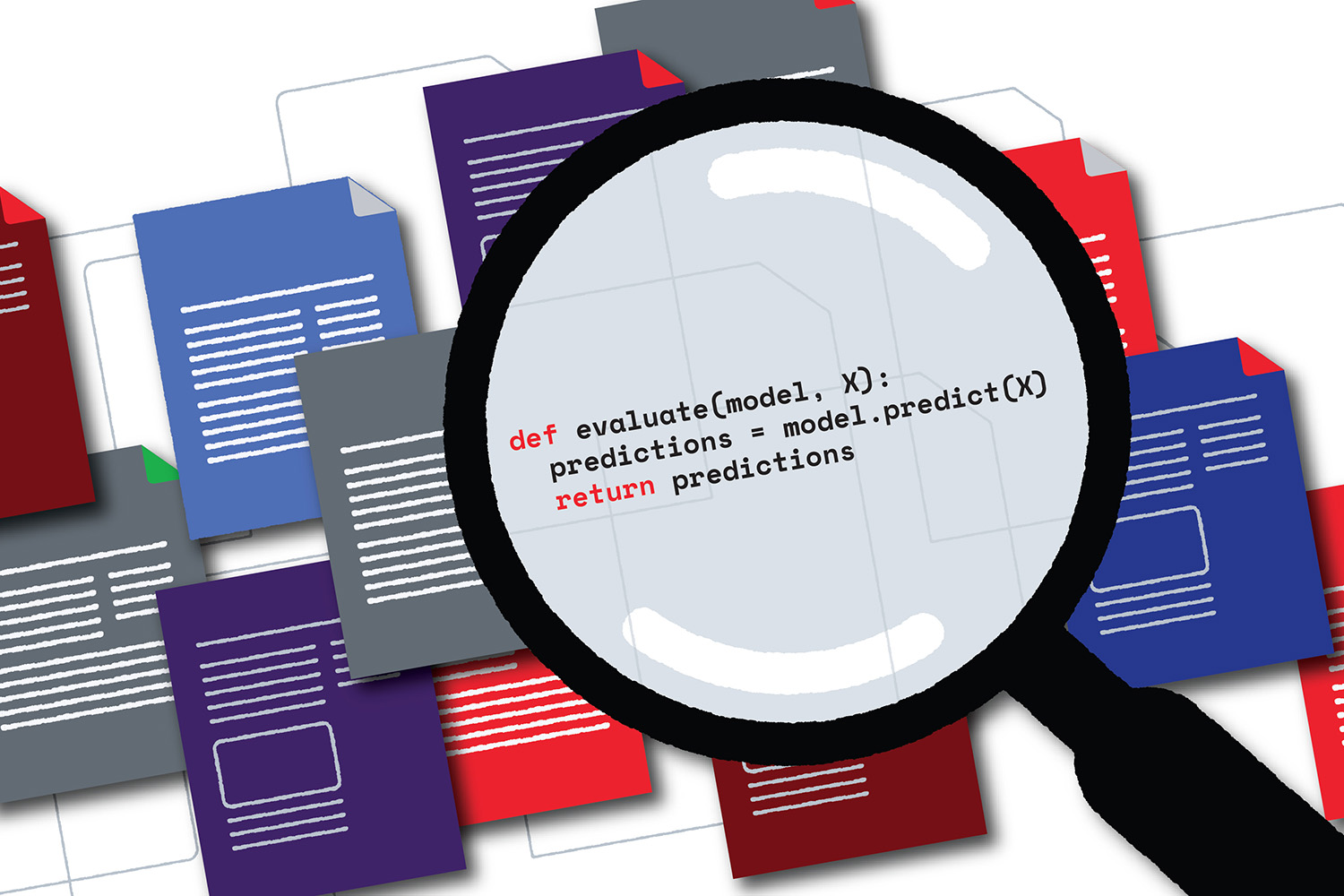
Researchers at MIT and Dana‑Farber used large language models (LLMs) to automatically scan nearly 4,000 clinical prediction papers, extract statements about code availability, and retrieve associated repositories for systematic assessment. Their analysis uncovered two major gaps: code sharing is still rare, and publicly posted code often lacks the documentation and metadata needed for reproducibility. The findings are being incorporated into the forthcoming TRIPOD‑Code reporting guideline, extending the existing TRIPOD and TRIPOD+AI checklists to standardize code‑sharing practices for medical AI studies. This work gives engineers a concrete, LLM‑driven workflow for large‑scale audit of research code compliance.
⚡ Key Takeaways
- Nearly 4,000 open‑access clinical prediction studies were examined using LLMs to locate code‑availability statements and repository links.
- The workflow combined LLM‑based text screening with automated retrieval of linked code repositories for downstream quality checks.
- Results show code sharing is uncommon and, when present, often lacks sufficient documentation, software requirements, or reuse terms.
- The audit informs the development of TRIPOD‑Code, a new reporting guideline that builds on TRIPOD and TRIPOD+AI to define required code artifacts.
- Limitation: The approach depends on the presence of explicit code links in papers; many authors describe code availability inconsistently, requiring manual verification.
By automating the detection and evaluation of shared research code, engineers can more efficiently enforce reproducibility standards and integrate compliance checks into publication pipelines, accelerating trustworthy AI deployment in healthcare.
✅ Practical Steps
- Use an LLM to parse full‑text papers, extract statements about code availability, and pull out repository URLs as described in the study.
- Run a scripted retrieval process to clone each linked repository and assess it against documentation completeness, software requirement listings, and reuse terms, mirroring the authors’ assessment pipeline.
Want the full story? Read the original article.
Read on MIT News AI ↗