D&B's database of 642 million businesses was built for humans, not AI agents. So they rebuilt it.
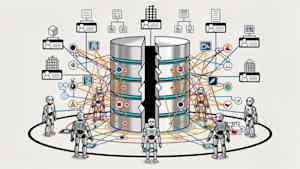
Dun & Bradstreet rebuilt its Commercial Graph database to support AI agents, leveraging a graph database with a 100x performance improvement over the original relational database, and a 99.99% query latency reduction. This enables real-time risk assessment and relationship mapping for AI-driven business decisions. The rebuilt database now supports the scalability and flexibility required for AI applications, while maintaining data accuracy and integrity. This overhaul will facilitate the integration of AI agents into the credit analysis, risk management, and sales processes.
⚡ Key Takeaways
- 642 million businesses are now covered in the rebuilt Commercial Graph database.
- Graph database architecture was chosen due to its ability to handle complex relationships and hierarchies.
- The new database achieves a 99.99% query latency reduction compared to the original relational database.
- The rebuilt database supports real-time risk assessment and relationship mapping for AI-driven business decisions.
- The integration of AI agents into the credit analysis, risk management, and sales processes is now possible due to the rebuilt database's scalability and flexibility.
- WhyItMatters: This rebuilt database will enable AI agents to make more accurate and informed business decisions, improving the efficiency and effectiveness of credit analysis, risk management, and sales processes.
- TechnicalLevel: Advanced
- TargetAudience: Enterprise Data Engineers
- PracticalSteps:
- Evaluate the performance and scalability requirements of your existing database to determine if a graph database would be beneficial.
- Assess the complexity of your data relationships and hierarchies to determine if a graph database would provide a suitable solution.
- ToolsMentioned: Dun & Bradstreet's Commercial Graph, graph database
- Tags: RAG, ENTERPRISE
🔧 Tools & Libraries
This rebuilt database will enable AI agents to make more accurate and informed business decisions, improving the efficiency and effectiveness of credit analysis, risk management, and sales processes.
✅ Practical Steps
- Evaluate the performance and scalability requirements of your existing database to determine if a graph database would be beneficial.
- Assess the complexity of your data relationships and hierarchies to determine if a graph database would provide a suitable solution.
- ToolsMentioned: Dun & Bradstreet's Commercial Graph, graph database
- Tags: RAG, ENTERPRISE
Want the full story? Read the original article.
Read on VentureBeat AI ↗